
Single Finest Richard III Groat (4p)
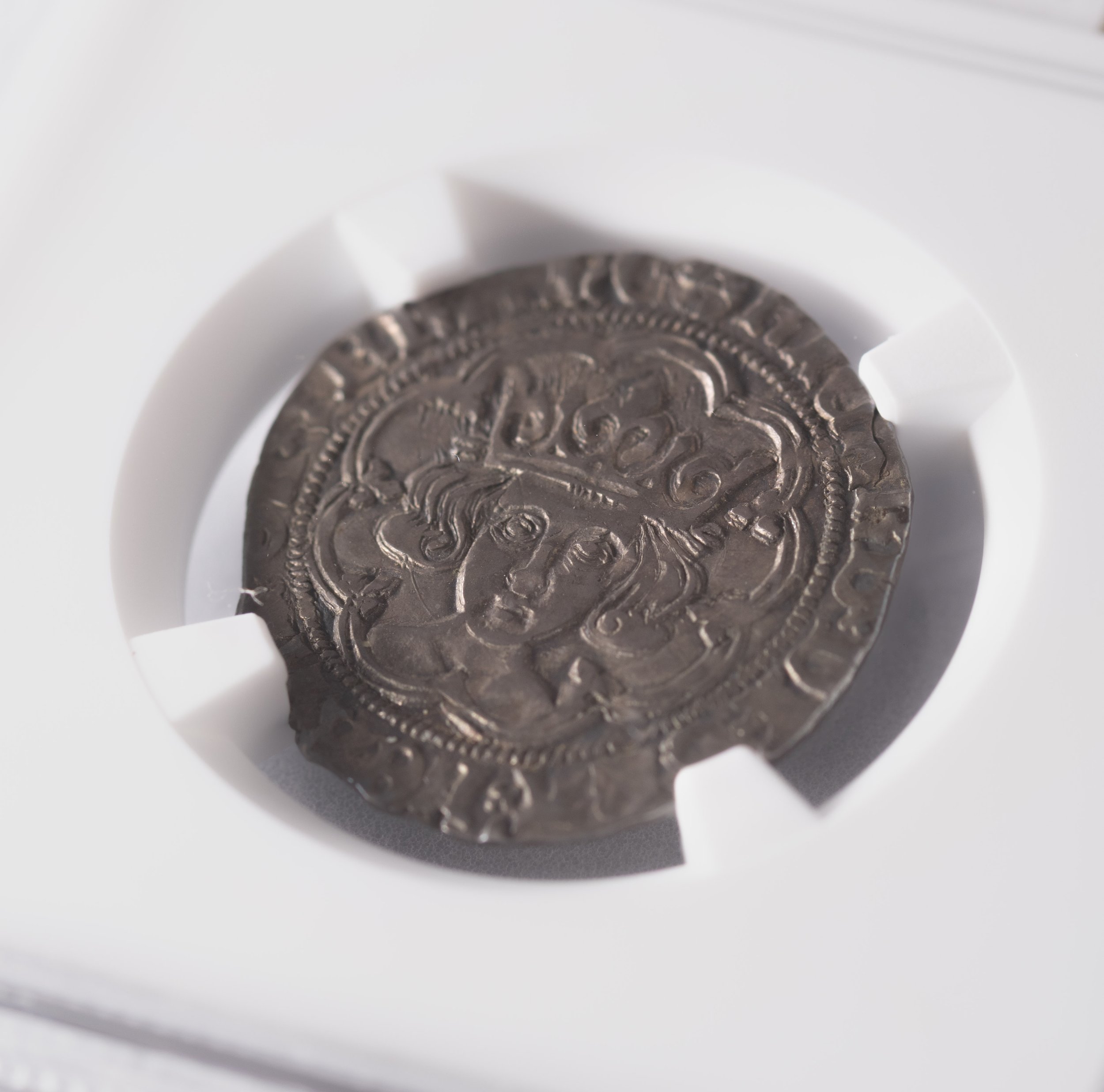
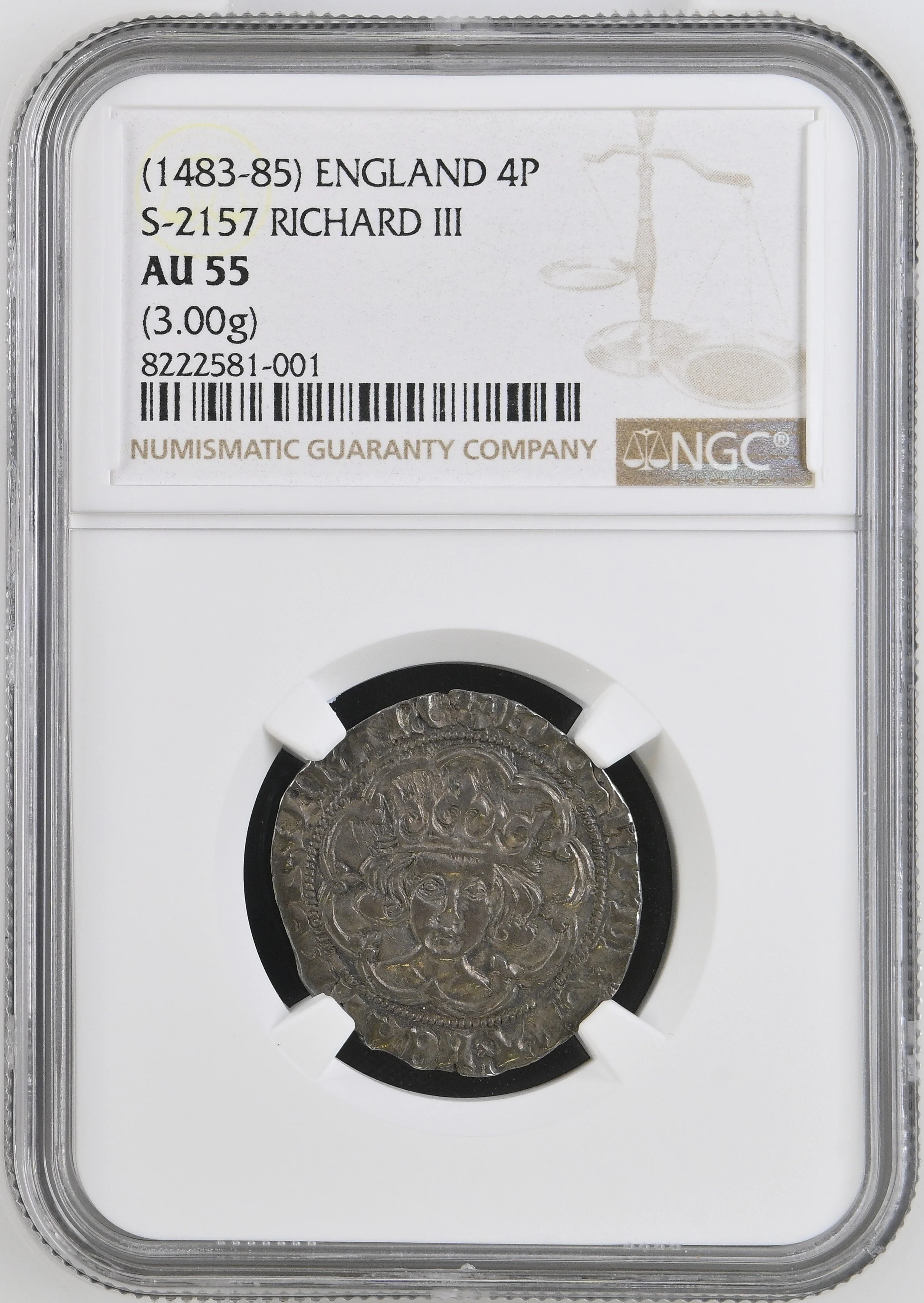
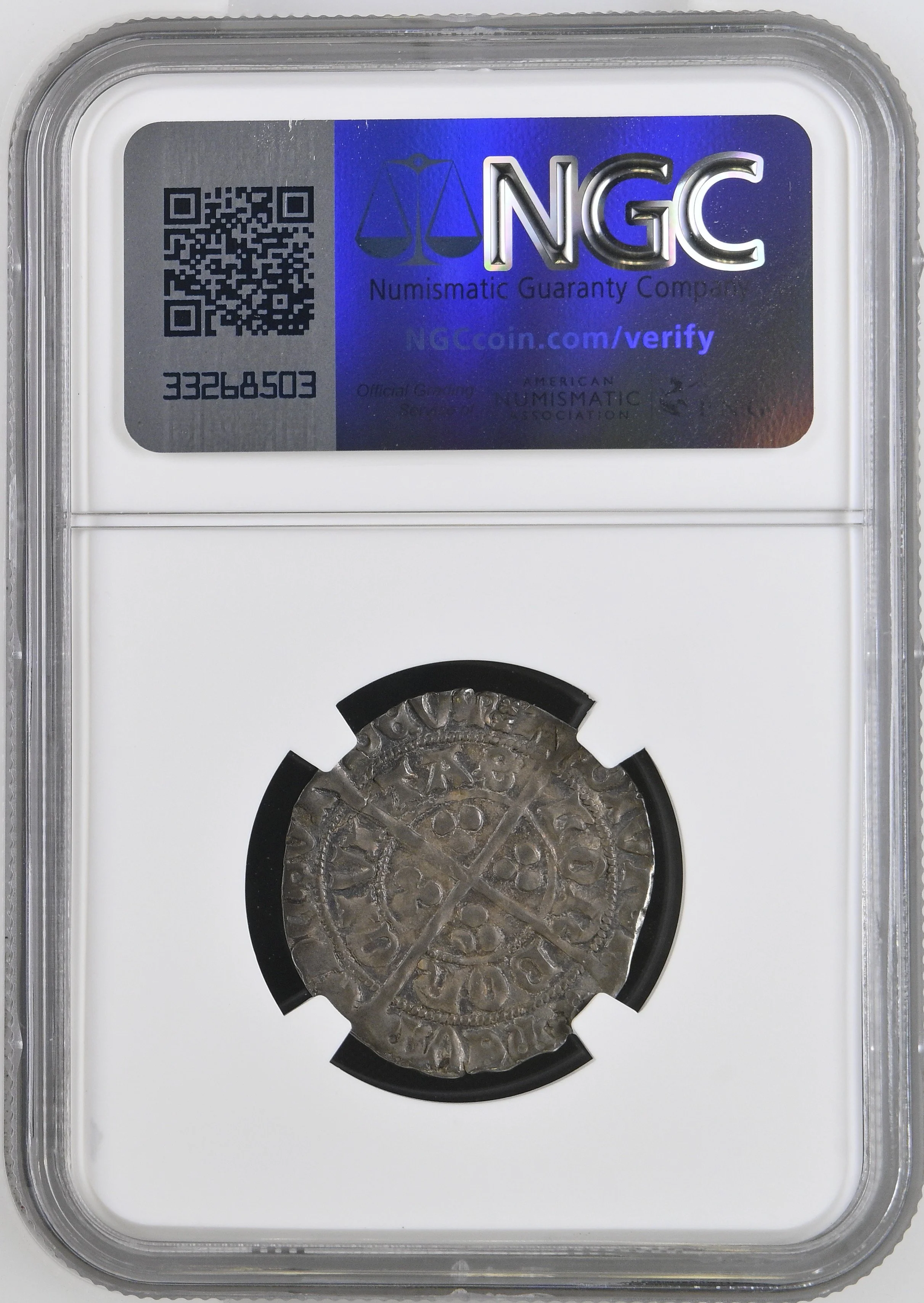
Richard III Groat (4 Pence) ND (1483-1485), London mint, Sun & Rose mm, S-2157. 3.00gm. A well-struck example of this desirable coin at full weight, rendered with impressive fullness across Richard's bust as well as the reverse long cross pattée and pellets design.
It is usual for these coins to be significantly clipped or having a myriad of other issues. To get a straight grade, let alone an AU example, is beyond rare. One small crack in flan (helpfully hidden by the slab).
Richard III coins are all rare due to his short reign. He is a much coveted Monarch by coin collectors as his reign not only marked the end of the House of York (and he beginning of the House of Tudor) but by many it is considered the end of the Middle Ages.
There has been renewed interest in Richard III in the early 21st Century and with it the coinage of this period.
The 2012 discovery of Richard III’s remains under a Leicester car park didn’t just solve a 500-year-old cold case; it led to the reassessment of who Richard III was and the impact his reign had. For centuries we only knew the Richard III of Shakespeare and Tudor propaganda—a hunched, bitter usurper. Whilst there is some thread of truth in this the forensic analysis proved he wasn't the "monster" he'd been painted as. This "Ricardian Renaissance" moved him out of the shadows and into a place where we could finally talk about his actual life rather than just his supposed crimes.
The groat was used across England for hundreds of years, typically worth four pence. Its name comes from the Old French word gros, meaning "great" or "large," because when it was first introduced by King Edward I in 1279, it was much bigger and thicker than the standard thin silver pennies of the time. While early versions were somewhat unpopular, the groat became a staple of English currency under Edward III in 1351 and remained the largest silver coin in circulation until the 16th century
Status: Available for acquisition
£4,000
About: Richard III
Richard III's reign (1483-1485), though extremely short, is one of the most controversial in English history, marked by his disputed accession to the throne and his eventual defeat and death at the Battle of Bosworth Field. Immortalised by Shakespeare and given a final resting place in 2015 after his remains were discovered under a carpark in Leicester.
Key aspects of his reign include:
Disputed Accession: Richard III became king after the death of his brother, Edward IV. He was declared Protector of the Realm for his young nephew, Edward V. However, he subsequently seized the throne, claiming that Edward IV's marriage was invalid and that his nephews (the "Princes in the Tower") were illegitimate. This act was highly controversial and led to widespread suspicion and opposition.
The Princes in the Tower: The fate of Edward V and his younger brother, Richard of Shrewsbury, remains one of history's great mysteries. They disappeared from the Tower of London shortly after Richard III took the throne, and their disappearance has been a source of speculation and debate for centuries.
Attempts to Secure the Throne: Richard III attempted to consolidate his power and gain popular support through various measures, including legal reforms and public works projects. However, he faced continued opposition and conspiracies against him.
The Battle of Bosworth Field: In 1485, Henry Tudor (later Henry VII) landed in England with an army, challenging Richard's claim to the throne. The two forces met at the Battle of Bosworth Field, where Richard III was defeated and killed. This battle marked the end of the Plantagenet dynasty and the beginning of the Tudor era. Richard III has the unfortunate accolade of being the last English King killed in battle.
The Legal Reformer: His work introducing the concept of bail and ensuring laws were translated into English so the common man actually understood them.
Richard III's reign is primarily remembered for the controversy surrounding his accession, the mystery of the Princes in the Tower, and his dramatic defeat and death at Bosworth Field. His short reign had a profound impact on English history, ushering in a new dynasty and a new era.