
Elizabeth I, 1590-92, Angel MS61
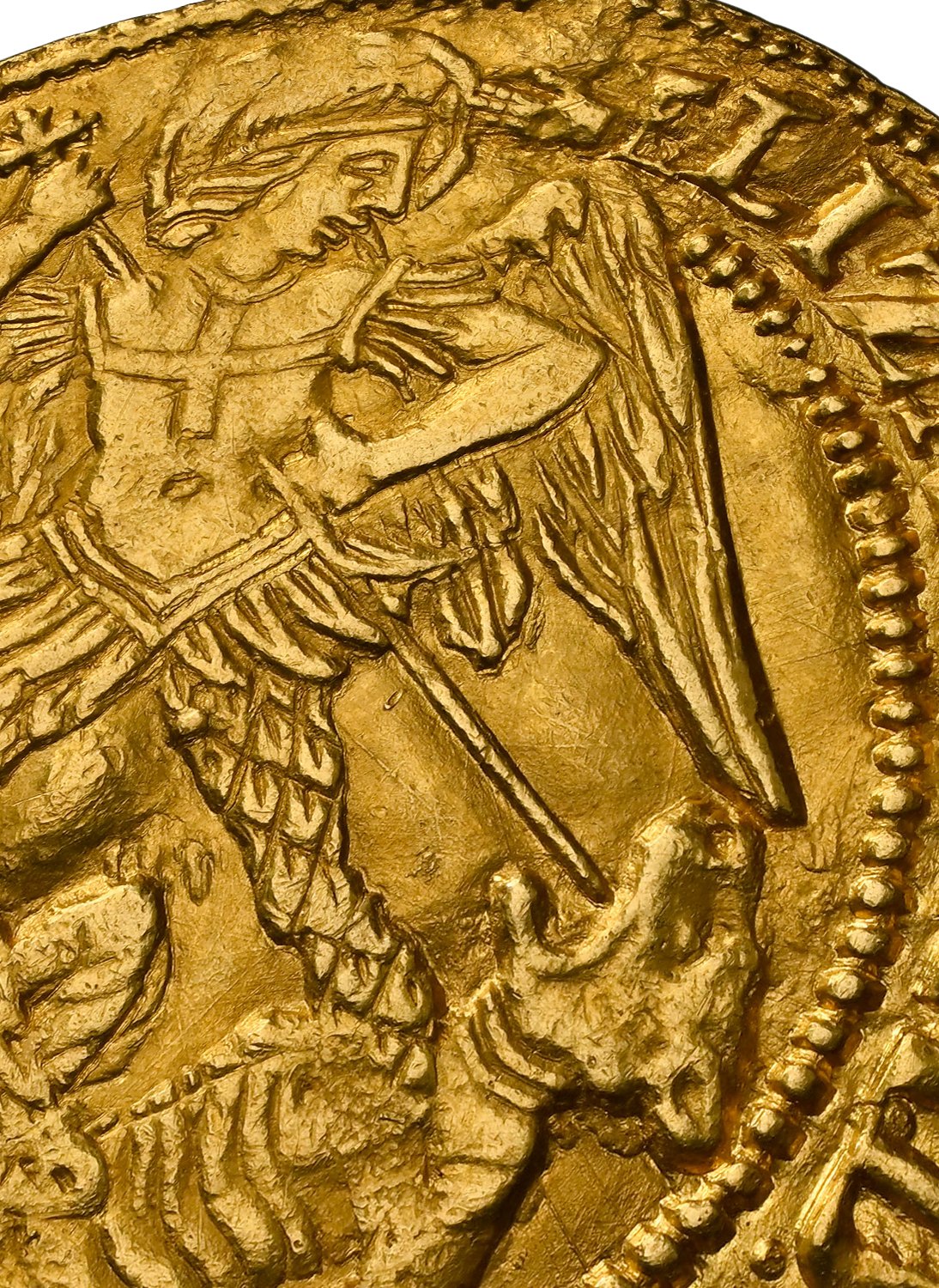
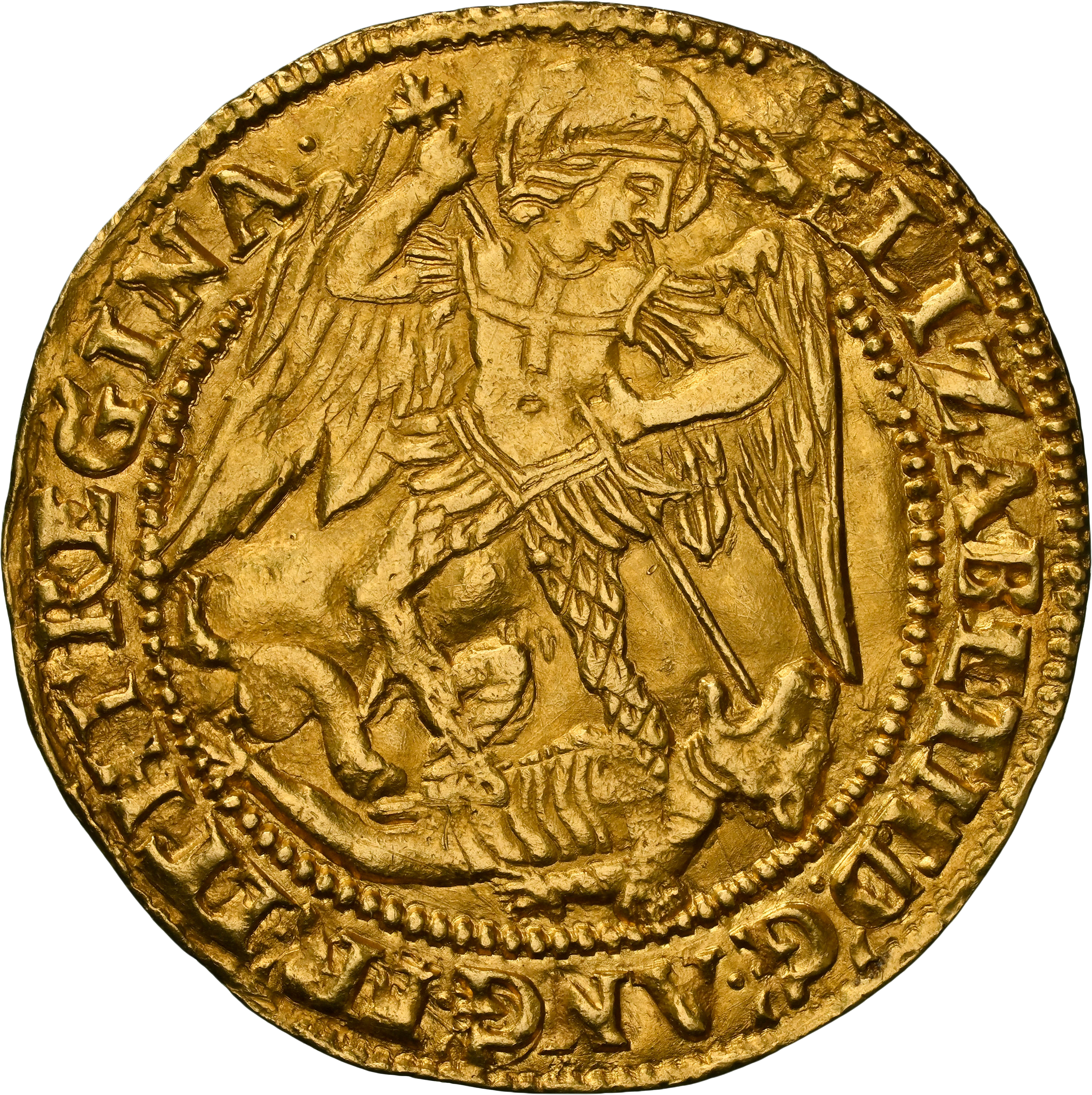
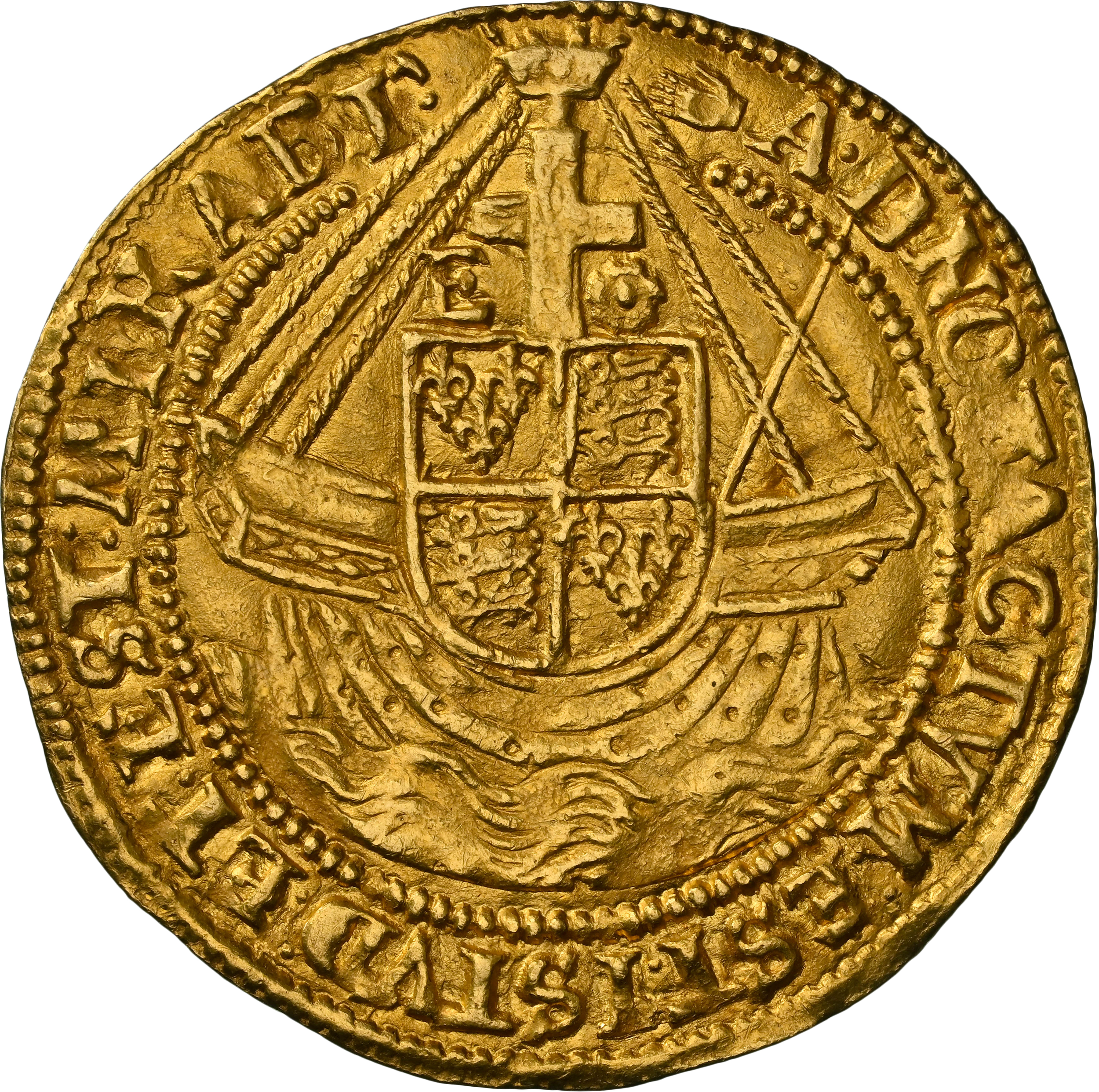
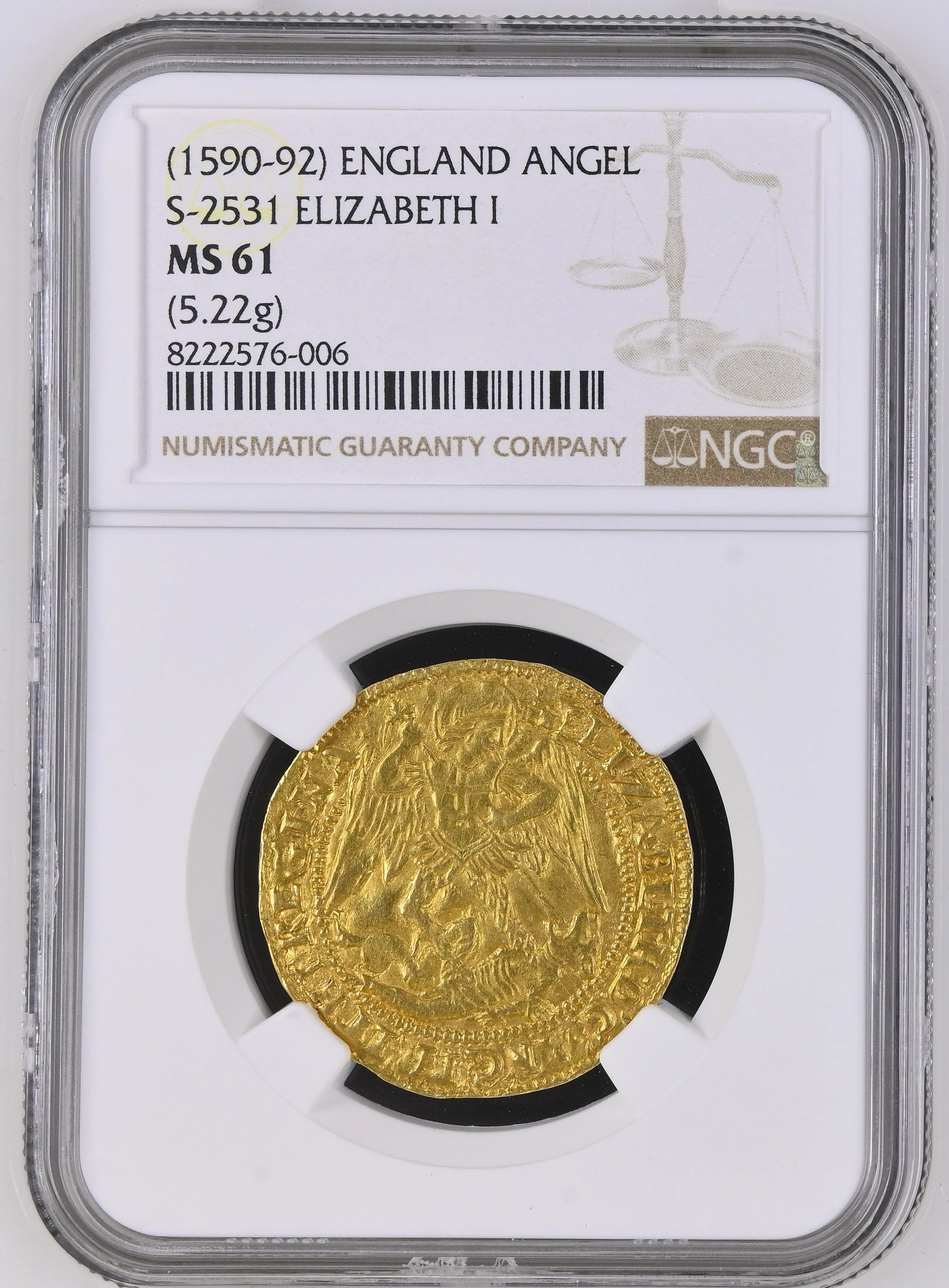
A remarkably well-preserved example, among the finest to appear on the market in recent memory
Very little striking weakness and minimal wear with all details extremely clear - perhaps harshly graded at MS61.
Importantly details of both St. Michael and the Dragon are exceptionally clear.
Following the significant currency debasements under Henry VIII, largely fuelled by his profligate spending on wars, Elizabeth I's sixth coinage issue marked a crucial step in stabilising England's economy. Struck in fine gold to ensure their intrinsic value and reliability for trade, these coins were instrumental in restoring international confidence in English currency, thereby improving trade relations. This renewed trust empowered merchants and significantly contributed to the economic recovery and expansion that characterised Elizabeth's reign. As the last of the Tudor monarchs, Elizabeth's monetary reforms left a lasting legacy.
Elizabeth I (1558-1603), Second 'Restoration' Coinage, Sixth Issue, Fine Gold (0.995), Angel or 10 Shillings, 1590-1592, Tower, (m.m.) ELIZABETH : D .' G .' ANG .' FR .' ET : HI .' REGINA, beaded inner circle, St. Michael vanquishing Dragon, rev. (m.m.) A • DNO : FACTVM : EST : ISTVD : ET : EST : MIRABI, beaded inner circle, ship with bowsprit, surmounted by square-topped shield and mast dividing E and rose, 5.22g, 10h, m.m. hand
About: Elizabeth I
Elizabeth I's reign (1558-1603) was a long and transformative period in English history, marked by religious stability, political manoeuvring, and the flourishing of English culture. Ascending the throne after the tumultuous reigns of her half-siblings, Edward VI and Mary I, Elizabeth skillfully navigated the complex religious landscape, establishing a moderate Protestant settlement that became known as the Elizabethan Religious Settlement.
A key achievement was the Act of Supremacy (1559), which reaffirmed the monarch as the Supreme Governor of the Church of England, and the Act of Uniformity (1559), which established a common prayer book and liturgical practices. This careful balance sought to avoid the religious extremes of her predecessors and brought a degree of stability to the nation.
Another significant event was the defeat of the Spanish Armada in 1588, a decisive naval victory that solidified England's position as a major European power and cemented Elizabeth's image as a strong and capable leader - typified but her speech at Tilbury where she proclaimed she may have the "body of a weak and feeble woman" but the "heart and stomach of a king". This victory also bolstered national pride and contributed to the burgeoning sense of English identity
Unlike her siblings, Elizabeth never married, choosing instead to dedicate herself to her country. Her unmarried status, though often debated, allowed her to use the prospect of marriage as a diplomatic tool, playing potential suitors against each other to England's advantage. This strategic approach to foreign policy helped maintain peace and stability for much of her reign. While she never produced an heir, her long and successful reign brought a period of relative peace and prosperity to England, laying the groundwork for its future as a global power. Her reign also saw a flourishing of the arts, most notably the works of William Shakespeare, further cementing her legacy as one of England's greatest monarchs.