
Charles I Gold ‘Group B’ Unite ND (1628-1629) AU55 PCGS
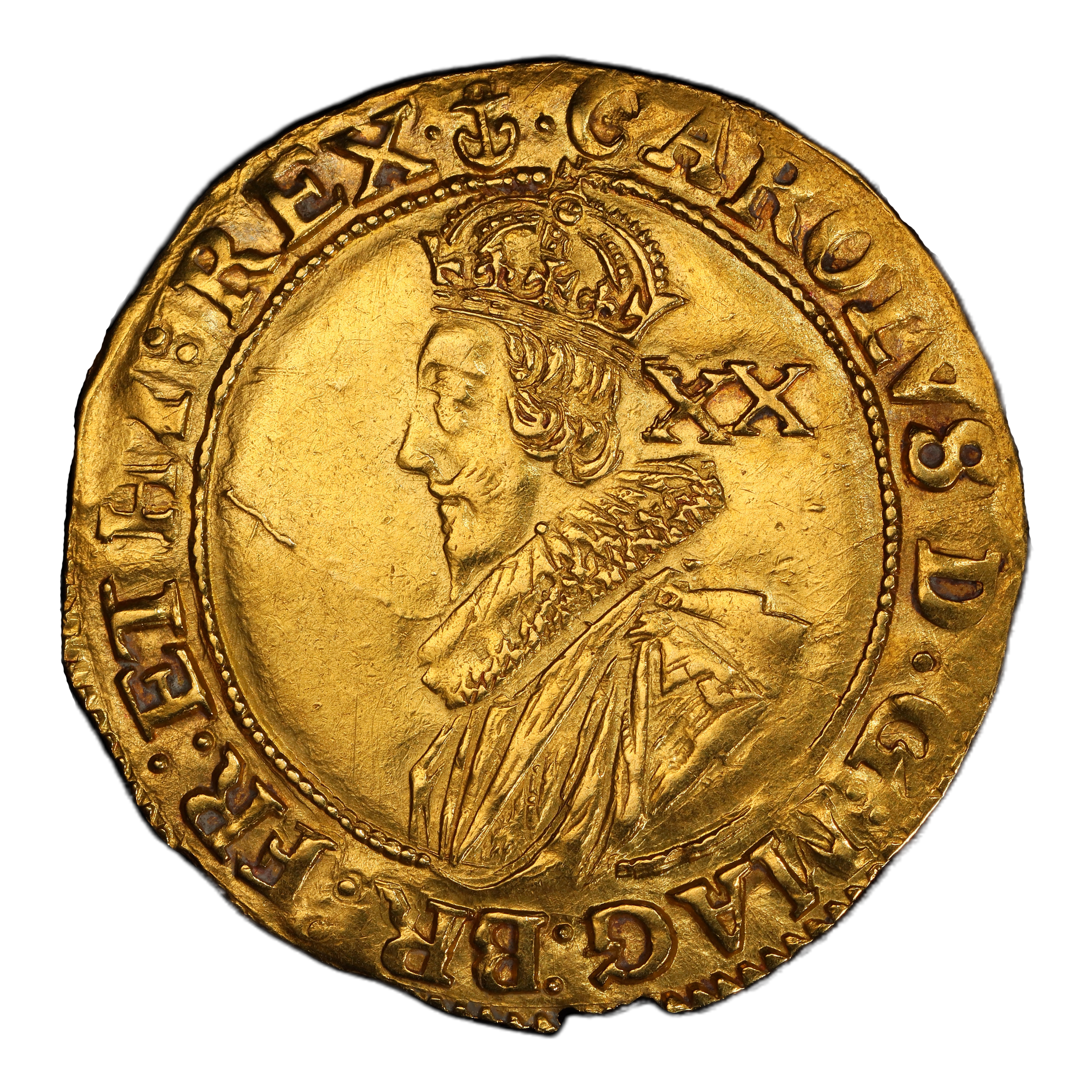
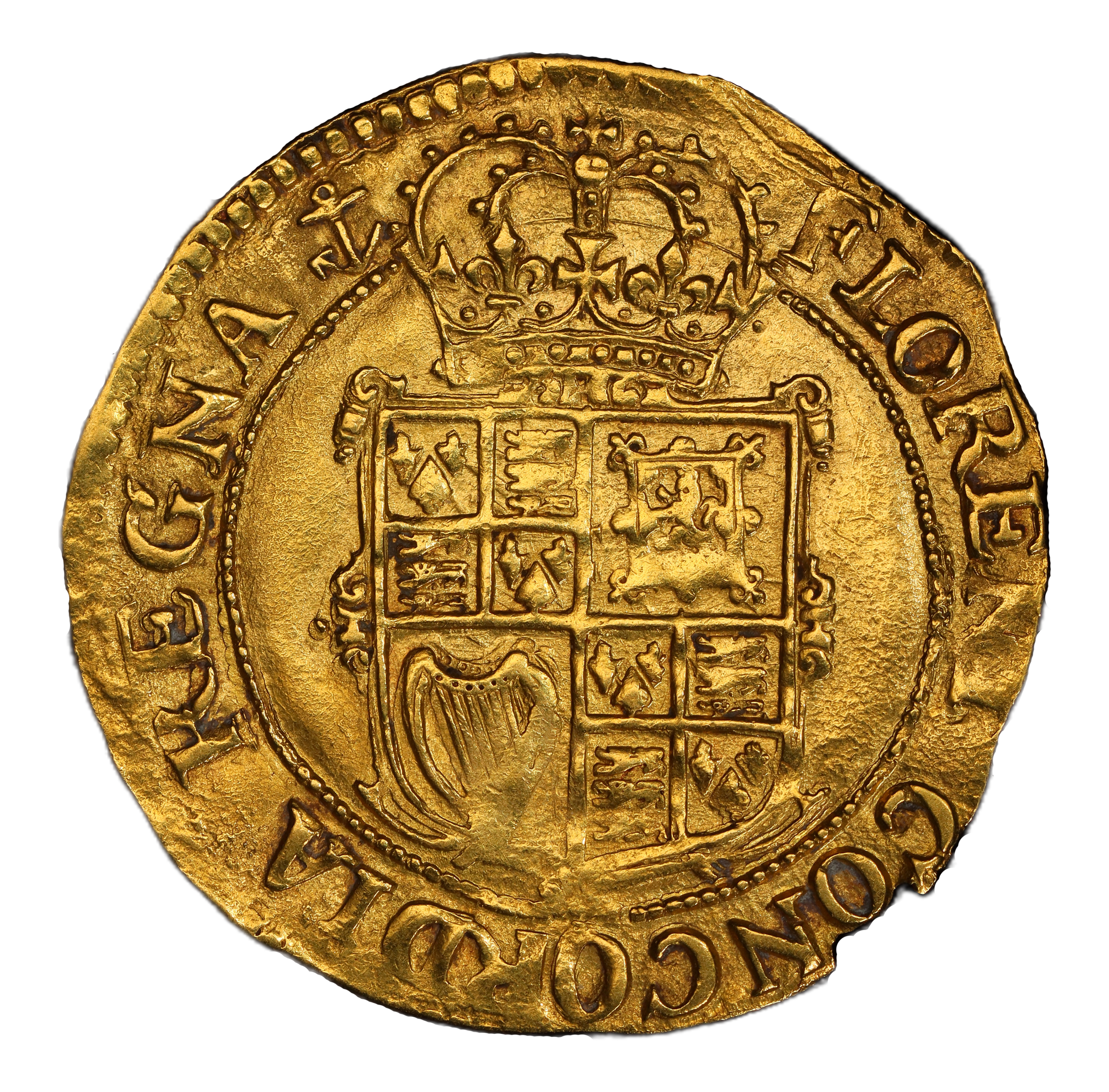
A charming example of this beautiful Unite of Charles I.
Charles' portrait is particularly well-rendered on this laudable specimen with the Anchor Mint Mark being unusually sharp (dictating production between 4th July 1628 and 26th June 1629 when Sir Robert Hartley was Master of the Mint.
One of the finer certified examples of this variety in existence and much finer in hand than the grade suggests. As testament to this it hammered for £8,000 at Spink in September 2024 (Auction 24005, Lot 293). Even the Tyrant Collection, with it’s rigorous demand for quality, cannot better this grade with their Charles I Unite.
Small chip to legend at 6 o’clock and die flaw in front of portrait - though neither detract.
Status: Available for Acquisition
£5,950
Tower mint (under Charles I), Upright anchor mm, KM151.1, S-2688, N-2148. 9.01gm. (anchor) • CAROLVS: D' : G' : MAG' : BR' : FR' : ET' : HIB' : REX :, crowned, mantled bust of Charles left, XX (denomination) behind / (anchor) FLORENT CONCORDIA • REGNA •, crowned Stuart arms.
About: Charles I
Charles I's reign (1625-1649) was defined by escalating tensions between the Crown and Parliament, culminating in the English Civil War and his eventual execution.
Inheriting the throne from his father, James I, Charles shared his belief in the divine right of kings, leading to frequent clashes with Parliament over issues of finance and royal prerogative.
A key event was his repeated dissolution of Parliament when it refused to grant him funds, most notably during the period of Personal Rule (1629-1640), also known as the "Eleven Years' Tyranny," when he ruled without Parliament. This period saw the implementation of unpopular policies, such as ship money, a tax levied without parliamentary consent, further fueling discontent.
Religious tensions also played a significant role, with Charles's support for High Anglicanism, viewed by many as too close to Catholicism, alienating Puritan factions within England and Scotland. This religious friction contributed to the outbreak of the Bishops' Wars in Scotland, which in turn forced Charles to recall Parliament to raise funds, ultimately leading to the Long Parliament and the outbreak of the English Civil War.
The English Civil War (1642-1646 and 1648) was the defining event of his reign, pitting the Royalists (Cavaliers) against the Parliamentarians (Roundheads). The war resulted in Charles's defeat and subsequent trial and execution for treason in 1649. His execution was a momentous event, marking the first time an English monarch had been publicly executed by his own people, and it led to the establishment of the Commonwealth under Oliver Cromwell. Unlike his father, whose reign saw a relatively peaceful transition and avoidance of major conflict, Charles I's reign was marked by constant conflict and ultimately led to the overthrow of the monarchy. His reign had a profound and lasting impact on English history, ushering in a period of republicanism and fundamentally altering the relationship between the Crown and Parliament.