
Unique example of this Dual Dated pattern 1829 half Sovereign in private hands
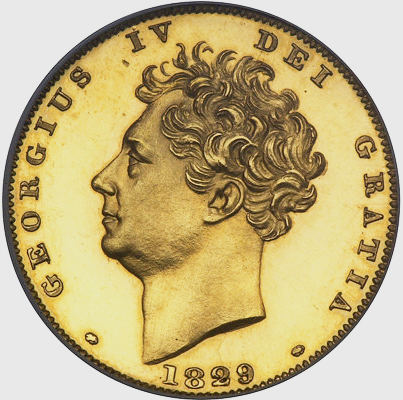
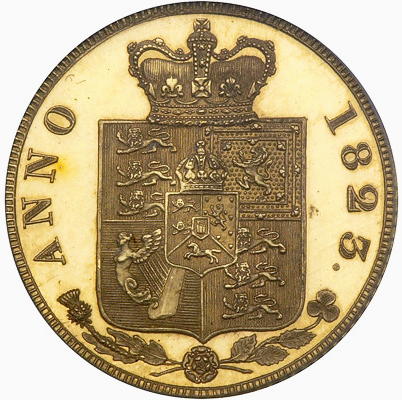
The only British Gold Pattern to feature 2 dates.
The only example in Private Hands
This is an exceedingly rare opportunity to own one of the most unique and interesting of British patterns: the sole 1829 half sovereign available to collectors and the only British gold pattern to feature two different dates.
With a rarity rating of R7 (1-2 known), the 1829 Dual Dated Mule Pattern Half Sovereign is a unicorn of British coinage. There are just two examples in existence, one of which has a permanent home in the Royal Mint Collection. This leaves the example offered here as the only 1829 half sovereign available to collectors. Any other 1829 half is a restrike. Not only is this coin exceedingly rare, but it is also of immense beauty and, as both a pattern and a dual dated mule, is of great numismatic interest.
Ownership of this coin would be a club of two members: you and The Royal Mint.
Perhaps the only ½ Sovereign this could be compared to is the Sydney 1853 gold Proof Pattern Half Sovereign. Whilst 4 of these are known to exist only one is in private hands (2 are held by the Royal Mint and the sole remaining example with The British Museum). This coin sold in early 2023 and realised $204,000 (£167,300).
A pattern can be more simply thought of as a prototype, that is a coin struck for test purposes prior to a full issue being struck. These coins are highly sought after for their rarity, often unique designs, and more personal connection to engravers and mint masters. A mule is a combination of two coins: the obverse of one, and the reverse of another. They are usually the result of an oversight by the mint and to have a muled, gold pattern, let alone one featuring two different dates (1829 and 1823), is completely extraordinary. Unsurprisingly, no other coins known feature this astounding combination of numismatic peculiarities. There is no acknowledgement of this coin’s existence, or any like it, in SPINK, Friedberg or the Standard Catalogue of World Coins.
As is almost always the case with coinage of this calibre, this example disappeared from the market for over 15 years after its last sale, and there is no record found of its sale prior to 2004. Collectors and investors who can secure pieces of this nature rarely want to part with them and, as such, the next opportunity to own this particularly important oddity of numismatics may be decades ahead of us.
This is a unique opportunity to own a coin that would be a highlight in even the most revered collections. It truly has to be seen to be fully appreciated.
George IV (1762-1830) was the personification of the decadent Regency period. Although the technical span of his reign was from 1820 to 1830, he had been in control of the country since early 1811 when his father’s debilitations forced a retirement in all practical senses. George, as Prince Regent, led (or was supposed to lead) the country through the Napoleonic Wars and 1816, The Year Without a Summer, when one of the most violent volcanic eruptions in 1,300 years plunged half of the world into a false winter with very real consequences. Nothing grew. And as such poverty was rampant. The tastes of the Prince however became more and more repugnant in their resplendence, growing almost as quickly as the public’s resentment of their deluded and gluttonous leader. Civil unrest bubbled and foamed only to be crushed with new, authoritarian laws such as the death penalty for unlicensed public meetings. Parliament agreed to clear the Prince’s debts if he would take a wife; which he did, only to disown and treat her with the cruel and cold brutality he had become so accustomed to. With his coronation, this story only continues. King George IV fiercely fought parliamentary reform while defending religious intolerance. Ashamed of his bloated physical appearance and diminished public appeal, the King eschewed public life and preferred to live his hedonism in private. He died in 1830, deranged, grossly overweight and a laughingstock.
Status: Available for acquisition
£85,000
Provenance:
Ex Terner
ex. Ira & Larry Goldberg Coins and Collectibles, California, United States. Auction 25, lot 1271, 31st May - 2nd June 2004
References:
Fr.unlisted; Hocking.1912; KM.unlisted; Marsh.409D; WR.253 [this coin]; S.unlisted