
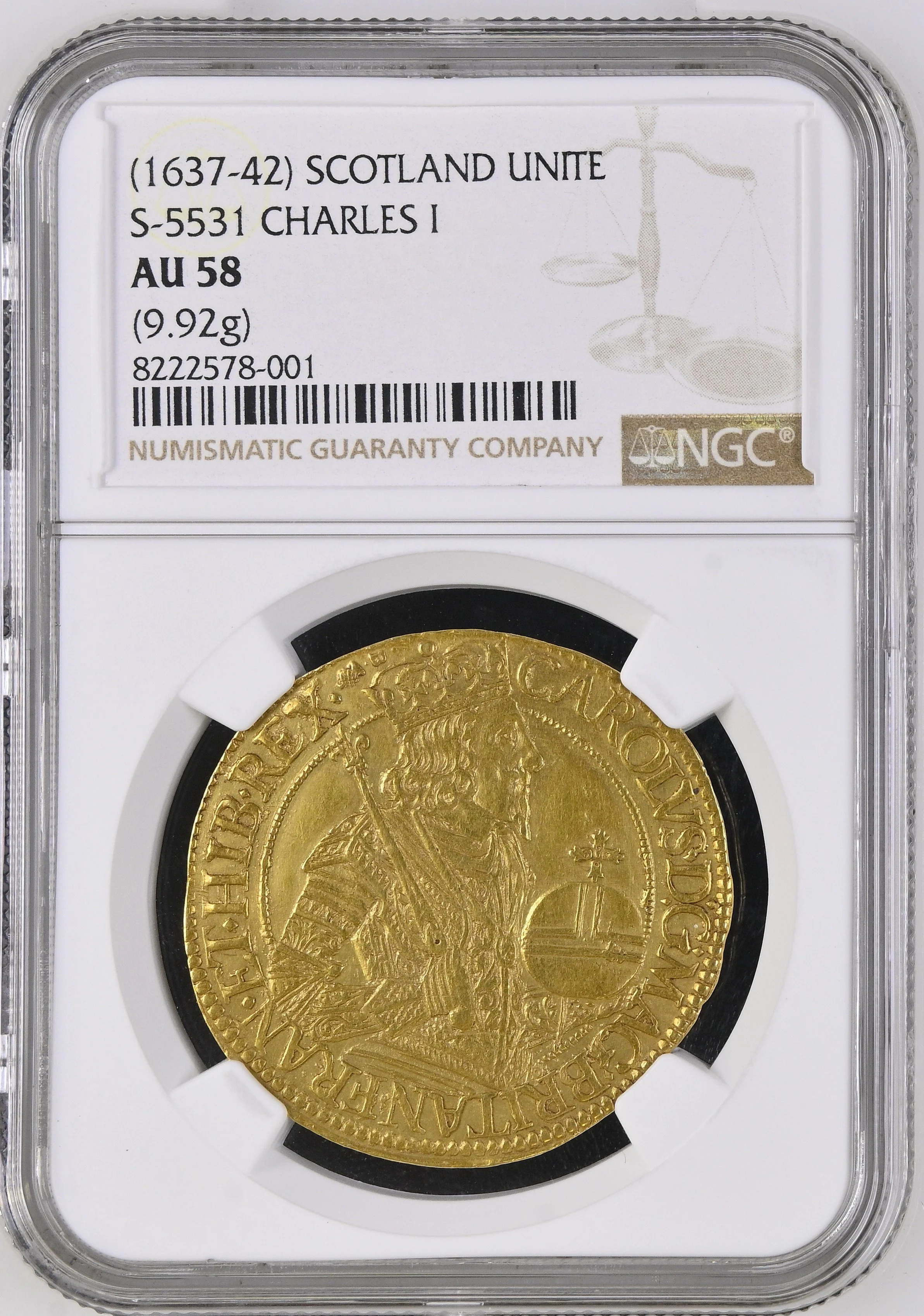
Scotland, Charles I Gold Unit by Briot AU58 s.5531
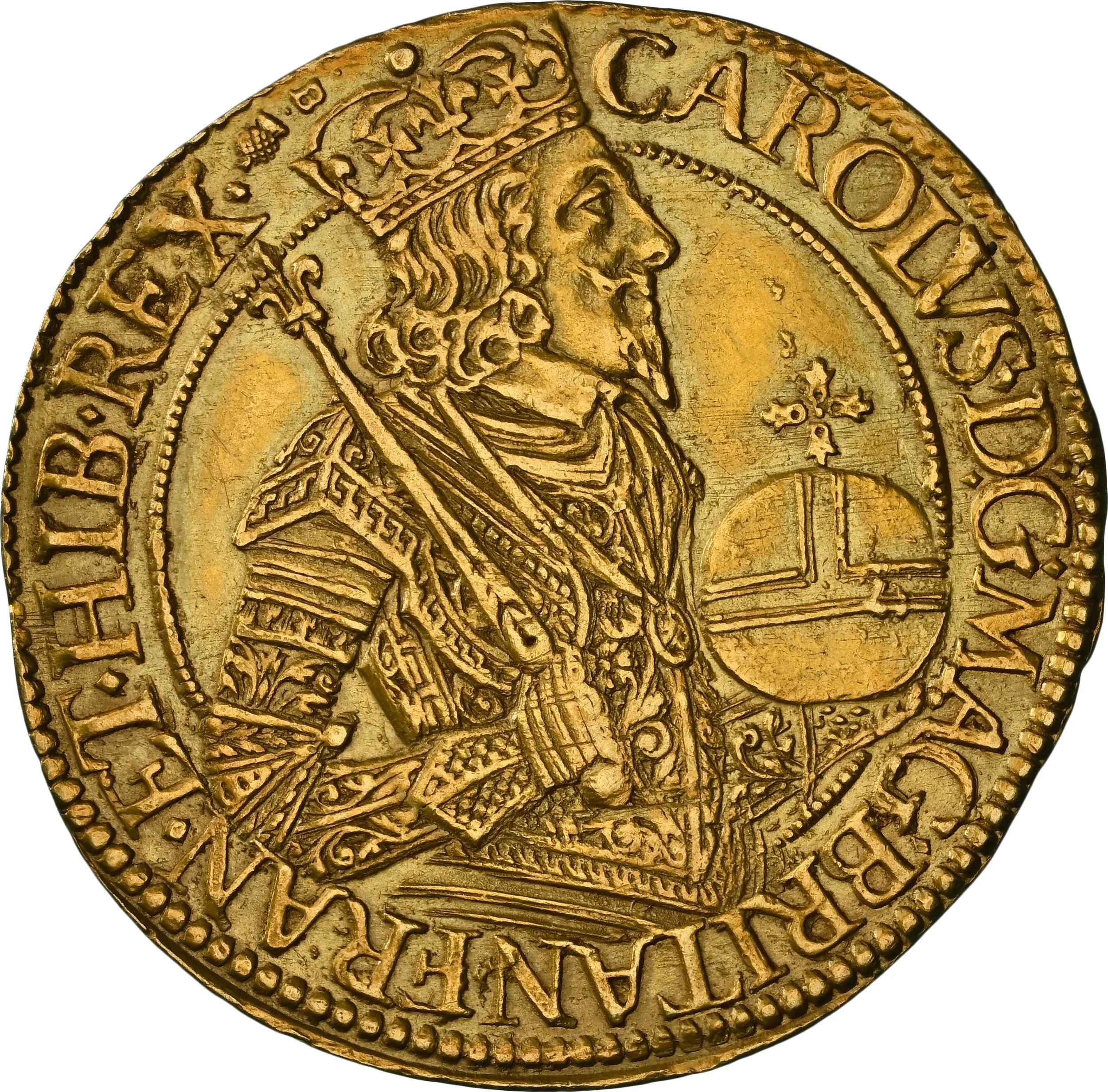
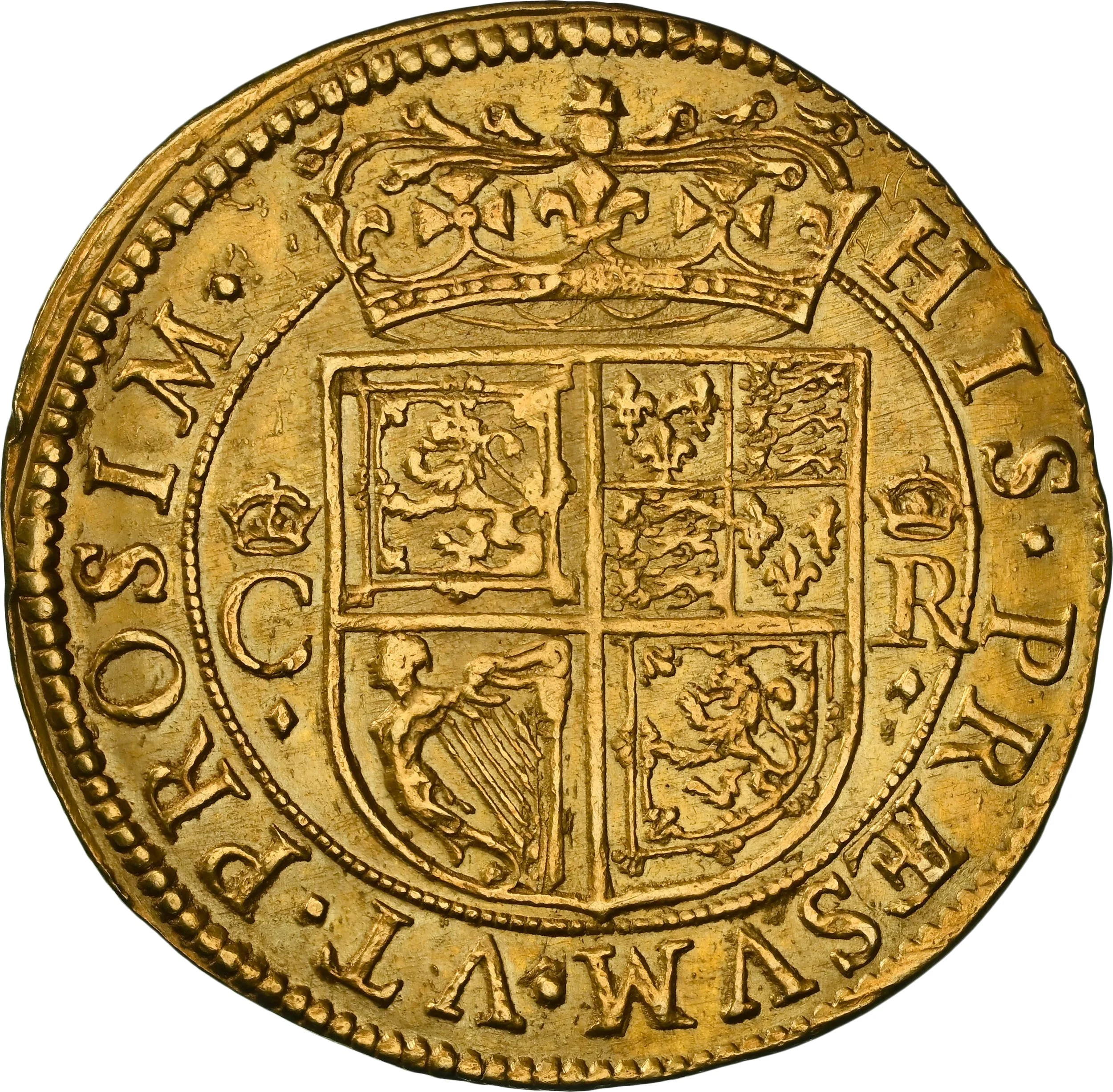
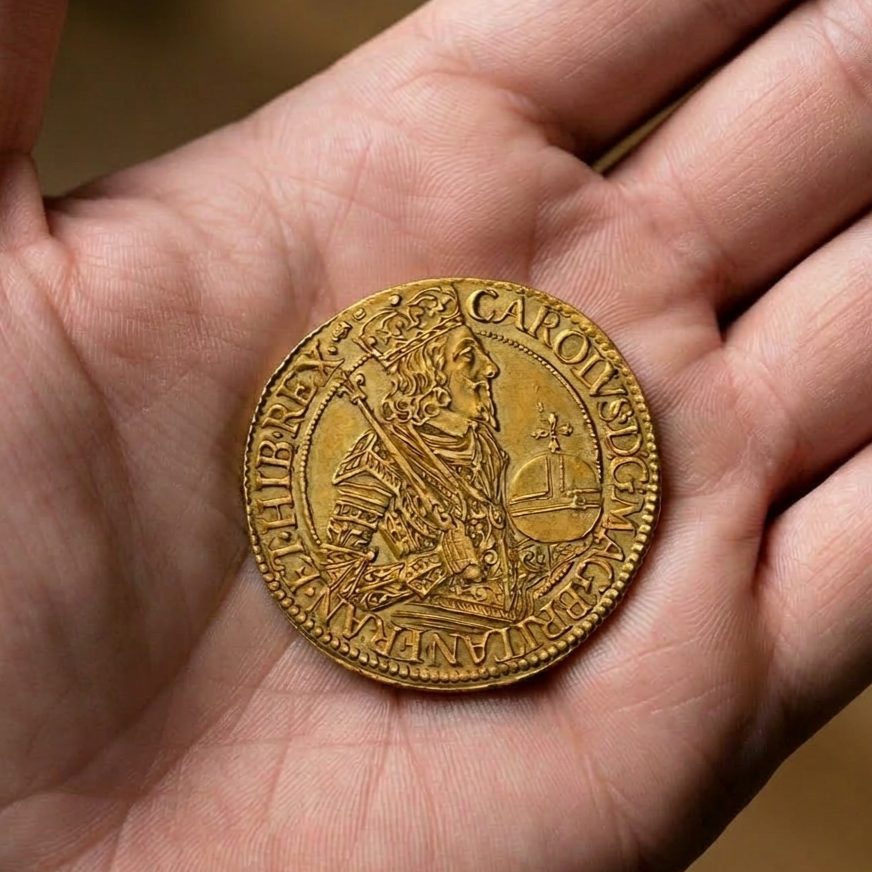
A truly excellent example of the ever popular coin from Nicholas Briot. Briot's introduction of machine-struck coins significantly enhanced the precision and aesthetic quality of Scottish coinage. However, his tenure in Scotland was brief; after his departure in 1638, the quality of coinage declined. The obverse is exceptional with little signs of wear, with the details of the Kings armour on magnificent display. Hard to better.
The scarcity of gold in Scotland meant the issue was limited in quantity.
We can find only five examples selling in this grade since 2009 (one at AU58*). In this time only 4 examples in higher grades have sold publicly at auction that we can see.
Briot’s time at the Scottish mint produced a level of technical precision hitherto unseen on British coinage. The Lords of Secret Council had sanctioned the use of Briot's mill and screw press for the minting of coinage on the 12th January 1637, at first for silver coins only, however, from 19th October 1637 a warrant was issued to strike gold coins from gold supplied from the Guinea coastline by the African Company. Direction was given on 14th December 1637 to Nicholas Briot and his son-in-law John Falconer at Edinburgh to issue Units, Halves and Quarters in the same specification as the first issue albeit now machine made by the screw press.
The Latin legends translate as on the obverse "Charles, by the grace of God, King of Great Britain, France and Ireland" and on the reverse "I am set over them, that I may be profitable to them”.
SCOTLAND. Unite (Sceptre), ND (1637-42)-B. Edinburgh Mint. Charles I.
S-5531; Fr-56; KM-57; Burns-3. By Nicholas Briot. Obverse: Half-length armored bust of Charles I, wearing Scottish crown and holding orb and scepter; Crowned shield diving C R, Scottish arms in 1st and 4th quarters.
About: Charles I
Charles I's reign (1625-1649) was defined by escalating tensions between the Crown and Parliament, culminating in the English Civil War and his eventual execution.
Inheriting the throne from his father, James I, Charles shared his belief in the divine right of kings, leading to frequent clashes with Parliament over issues of finance and royal prerogative.
A key event was his repeated dissolution of Parliament when it refused to grant him funds, most notably during the period of Personal Rule (1629-1640), also known as the "Eleven Years' Tyranny," when he ruled without Parliament. This period saw the implementation of unpopular policies, such as ship money, a tax levied without parliamentary consent, further fueling discontent.
Religious tensions also played a significant role, with Charles's support for High Anglicanism, viewed by many as too close to Catholicism, alienating Puritan factions within England and Scotland. This religious friction contributed to the outbreak of the Bishops' Wars in Scotland, which in turn forced Charles to recall Parliament to raise funds, ultimately leading to the Long Parliament and the outbreak of the English Civil War.
The English Civil War (1642-1646 and 1648) was the defining event of his reign, pitting the Royalists (Cavaliers) against the Parliamentarians (Roundheads). The war resulted in Charles's defeat and subsequent trial and execution for treason in 1649. His execution was a momentous event, marking the first time an English monarch had been publicly executed by his own people, and it led to the establishment of the Commonwealth under Oliver Cromwell. Unlike his father, whose reign saw a relatively peaceful transition and avoidance of major conflict, Charles I's reign was marked by constant conflict and ultimately led to the overthrow of the monarchy. His reign had a profound and lasting impact on English history, ushering in a period of republicanism and fundamentally altering the relationship between the Crown and Parliament.
Nicholas Briot: The Visionary Behind Modern Coinage
When you hold a modern coin, with its precise details and perfectly round shape, you're experiencing the legacy of a man named Nicholas Briot. Though not a household name, Briot was a key figure in the transition from the ancient practice of hammered coinage to the modern method of milling. His story is one of innovation, artistic talent, and the challenges of overcoming resistance to change.
A Continental Master Craftsman:
Born around 1579 in Damblain, Lorraine (then part of the Duchy of Bar), Nicholas Briot was immersed in the world of metalworking from a young age. Coming from a family of goldsmiths and engravers, he received rigorous training in these intricate crafts. This early experience provided him with a deep understanding of metallurgy, design, and the precision required for fine metalwork. He honed his skills at the Paris Mint, where he became familiar with the latest advancements in coin production, including the emerging technology of milled coinage.
A Royal Summons to England:
In the early 17th century, England's coinage was still largely produced using the traditional hammered method, a process that was both labor-intensive and resulted in coins that were often irregular in shape, weight, and design. King Charles I, a known patron of the arts and sciences, recognized the need for improvement and sought to modernize the Royal Mint. Hearing of Briot's expertise, Charles I invited him to England around 1625.
Briot's Innovations at the Royal Mint:
Briot arrived in England with a clear vision: to revolutionize coin production. He brought with him not just his skills as an engraver but also his knowledge of advanced machinery and techniques. His key innovations included:
Improved Screw Presses: The screw press was the heart of the milled coinage process. Briot refined the design and construction of these machines, making them more powerful, reliable, and capable of producing coins with greater precision.
Preparation of Metal Blanks: Briot also introduced more efficient methods for preparing the metal blanks from which coins were struck. This involved using rolling mills to create sheets of metal with consistent thickness and cutting machines to produce perfectly round blanks. This uniformity was crucial for ensuring consistent weight and size in the final coins.
Milled Edges: A Security Feature: Perhaps Briot's most significant contribution was the introduction of milled edges. This involved adding a pattern of fine lines or other markings around the edge of the coin. This innovation served two important purposes: it prevented "clipping," a common practice where people would shave off small amounts of precious metal from the edges of hammered coins, and it also added to the coin's aesthetic appeal, giving it a more finished and professional look.
Artistry and Design:
Briot was not merely a technician; he was also a highly skilled artist. His coin designs were renowned for their elegance, intricate details, and fine craftsmanship. He excelled at creating detailed portraits of the monarch and incorporating elaborate heraldic devices, elevating the coin to a work of art.
Resistance and Setbacks:
Despite the King's support and the clear advantages of milled coinage, Briot faced significant resistance from within the Royal Mint. The established mint workers, accustomed to the traditional hammered method, feared that the new machinery would lead to job losses. This resistance manifested in various ways, including deliberate obstruction of Briot's work, accusations of mismanagement, and even sabotage of his equipment. These obstacles significantly hampered his efforts to fully implement milled coinage in England during Charles I's reign.
Success in Scotland:
Frustrated by the resistance he faced in England, Briot eventually found greater success in Scotland. In 1635, he was appointed Master of the Scottish Mint, where he was able to implement his innovations more effectively. His work in Scotland further demonstrated the superiority of milled coinage and solidified his reputation as a leading innovator in the field.
A Lasting Legacy:
While his immediate impact in England was limited, Nicholas Briot's contributions were crucial in paving the way for the eventual widespread adoption of milled coinage during the reign of Charles II. His technical innovations, artistic talent, and unwavering belief in the potential of milled coinage left a lasting legacy on British numismatics. Today, his coins are highly prized by collectors, not only for their beauty and rarity but also for their historical significance as examples of early milled coinage in Britain. His story serves as a reminder that progress often faces resistance, but the vision and perseverance of individuals like Nicholas Briot can ultimately lead to significant advancements.