
Joint Finest (NGC). Henry VII Angel. MS64. s. 2187
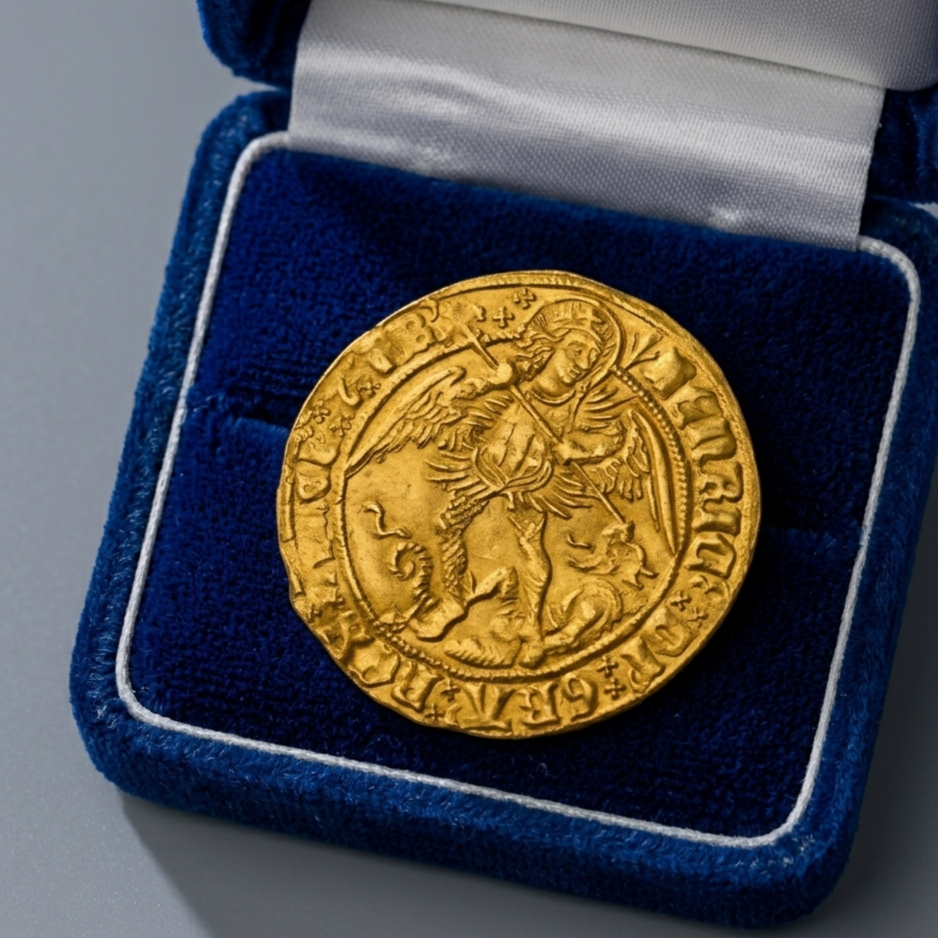
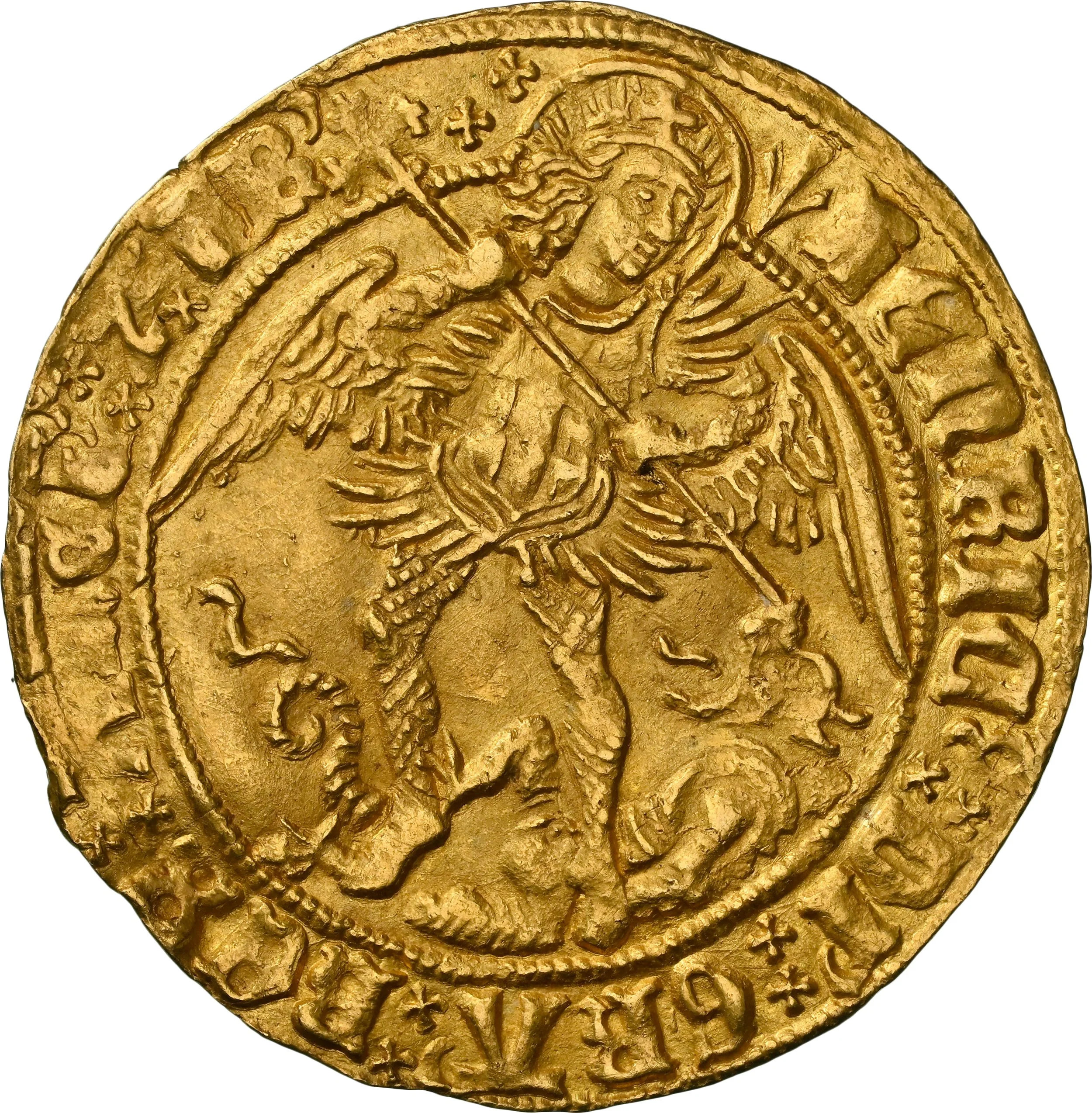
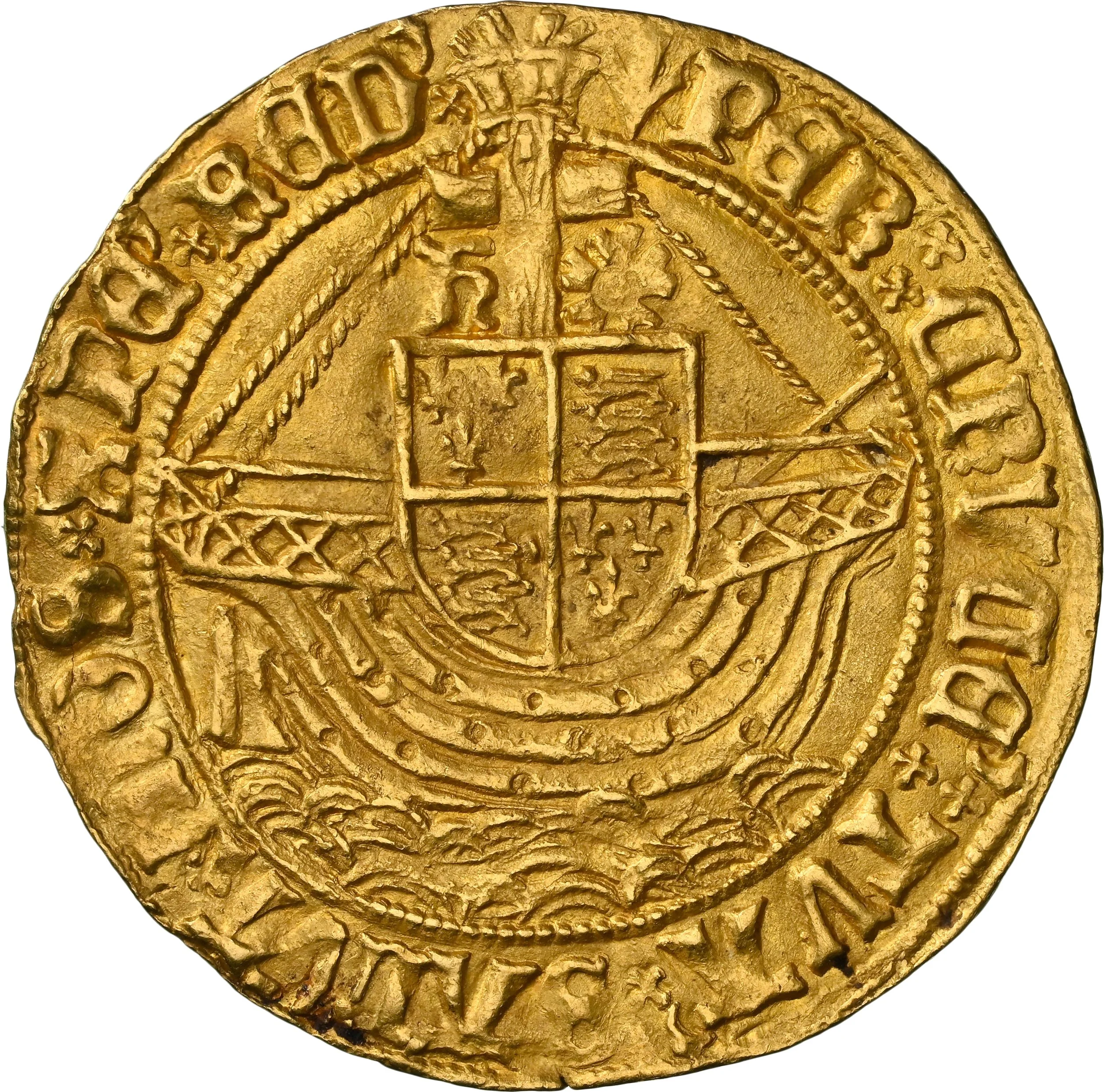
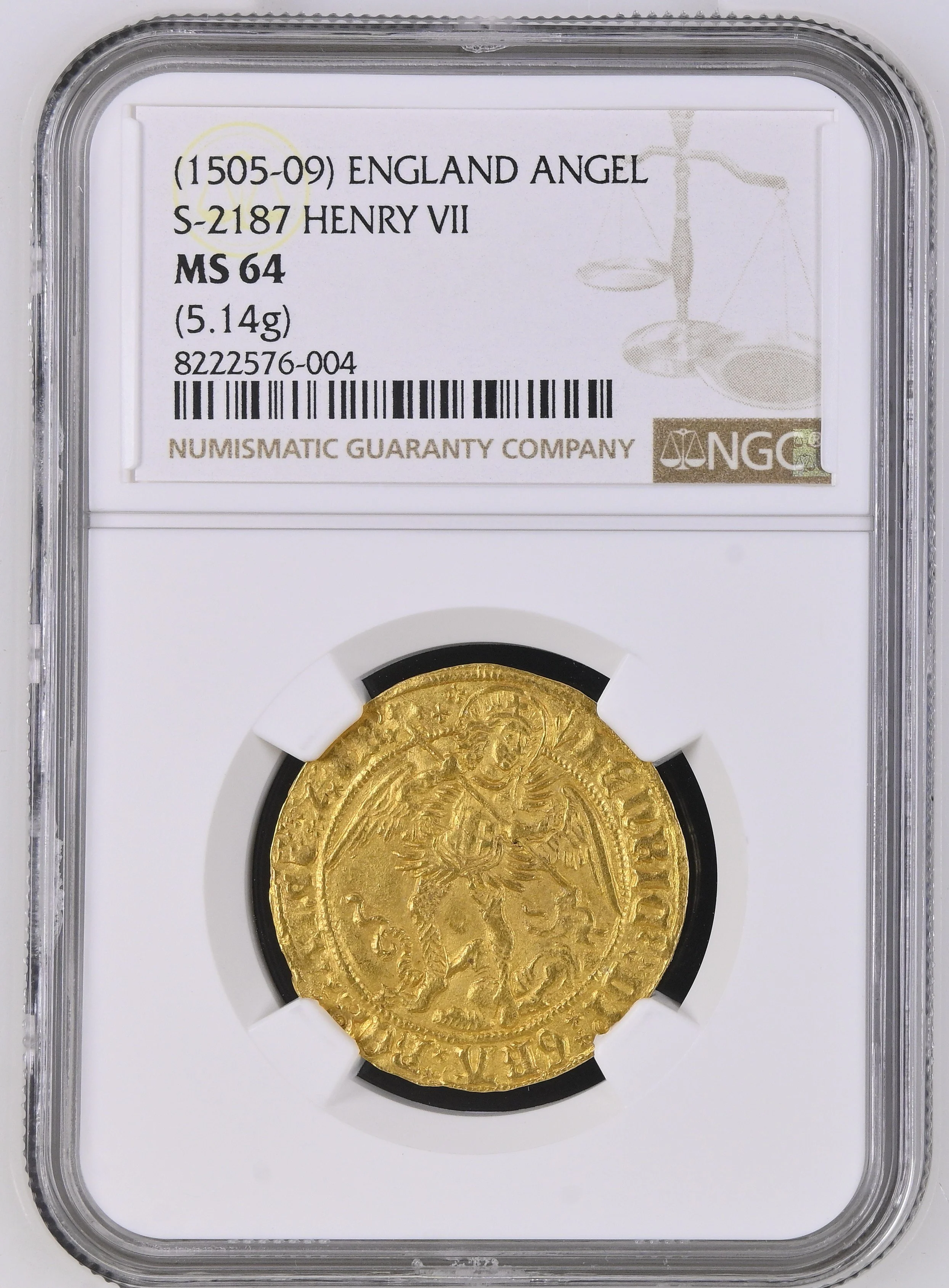
An exceptional and rare Mint State example of the coinage of Henry VII.
In numismatic terms Henry VII is most notable for the introduction of the Sovereign, a variety of which is still minted to this day. With these original sovereigns being such rarities they command significant sums which makes the Angels the only realistically accessible gold coins of Henry VII. To have an example in such exceptional condition is an opportunity not to be missed.
Henry VII (1485-1509), Angel, class V, initial mark downward Pheon both sides (c.1505-09). St. Michael standing slaying the dragon breaking linear circle, cross crosslet stylised spear shaft, legend surrounds HENRIC DI GRA REX ANGL Z FRA, large crooked abbreviation following Henric. Rev, ship sailing right, bowsprit meets wire line circle, quartered shield on hull, h and rose either side, legend reads PER
CR VCE TVA SALVA NOS XPE RED, double and single saltire stops, 5.07g (S.2187; N.1698; Schneider 542).
Whilst for many Henry VII may be most famous as the father of Henry VIII he had a profound and lasting effect on Britain and it’s coinage.
His reign not only marked the end if the war of the roses but also the end of mediaeval Britain and the start of the Renaissance. His accession also marks the start of one of the most famous dynasties in British history - the Tudor age.
About: Henry VII
Henry VII's reign (1485-1509) marked the end of the Wars of the Roses and the beginning of the Tudor dynasty, ushering in a period of relative peace and stability after decades of civil war. Ascending the throne by right of conquest after defeating Richard III at the Battle of Bosworth Field, Henry VII faced the immediate challenge of consolidating his power and uniting the divided kingdom.
Key aspects and events of his reign include:
Ending the Wars of the Roses: His marriage to Elizabeth of York in 1486 symbolically united the warring houses of Lancaster and York, helping to quell further conflict and solidify his claim to the throne.
Consolidating Royal Power: Henry VII was a shrewd and effective administrator who focused on restoring royal authority and financial stability. He employed methods like bonds to control the nobility and prevent further uprisings. He also strengthened royal finances through efficient tax collection and careful management of crown lands.
Suppressing Rebellions: Despite his efforts at unification, Henry faced several rebellions and pretenders to the throne, including Lambert Simnel and Perkin Warbeck. His successful suppression of these threats further strengthened his position and secured the Tudor dynasty.
Foreign Policy: Henry pursued a cautious foreign policy, prioritizing peace and trade. He negotiated treaties with other European powers to secure England's position and avoid costly wars.
Economic Prosperity: His reign saw a period of economic growth and prosperity, driven by increased trade and exploration. He encouraged English merchants and invested in shipbuilding, laying the foundation for England's future maritime power.
Unlike the turbulent reigns of his predecessors, Henry VII's reign was characterized by stability, consolidation, and careful administration. He laid the groundwork for the more flamboyant and impactful reign of his son, Henry VIII, by establishing a strong and financially secure monarchy.
The Coinage of Henry VII
A New Era in Coinage:
For the first four years of his reign Henry’s coins only differ in name (and differing mintmark) but from 1489 Henry VII's coinage marked a significant departure from the practices of previous reigns in several ways. He introduced new denominations, standardised designs, and emphasised the quality and purity of the metal. These changes reflected his desire to create a stable and reliable currency that would enhance trade and commerce.
Key Denominations and Designs:
Henry VII's coinage included a variety of denominations in both gold and silver. Here are some of the most important:
The Sovereign (Gold): The sovereign was introduced in 1489 and was the largest gold coin of the realm. It featured the king enthroned on the obverse and the Royal Arms with a Tudor rose on the reverse. This coin was a powerful symbol of royal authority and prestige. A Pound Sterling had been used for Centuries as a denomination but this was the first time a coin of this value had ever been minted. The ‘new’ Sovereign was introduced in 1817 and is now arguably the most famous coin in existence
The Testoon (Silver): Introduced in 1504 under Henry VII, the testoon (worth 12 pence) is considered a precursor to the shilling. It was significant for featuring a profile portrait of the king, a departure from the traditional facing portrait.
Symbolism and Propaganda:
Henry VII's coinage was carefully designed to convey specific messages and reinforce his authority:
Royal Portraits: The use of realistic portraits of the king emphasised his personal authority and legitimacy.
Tudor Rose: The prominent display of the Tudor rose on several coins symbolised the union of the Houses of York and Lancaster and the establishment of the Tudor dynasty.
Impact and Legacy:
Henry VII's coinage had a significant impact on the English monetary system. He introduced new denominations, standardised designs, and emphasised the quality of the metal, contributing to a more stable and reliable currency. His coinage also played a crucial role in promoting the Tudor dynasty and projecting royal authority.
The coinage of Henry VII is a fascinating reflection of his reign and his efforts to establish a strong and stable kingdom. His coins are not just historical artifacts; they are also powerful symbols of Tudor power and a testament to the importance of coinage in shaping national identity.