
Unique Proof Silver Striking of the 1887 Melbourne Mint Sovereign - PF64
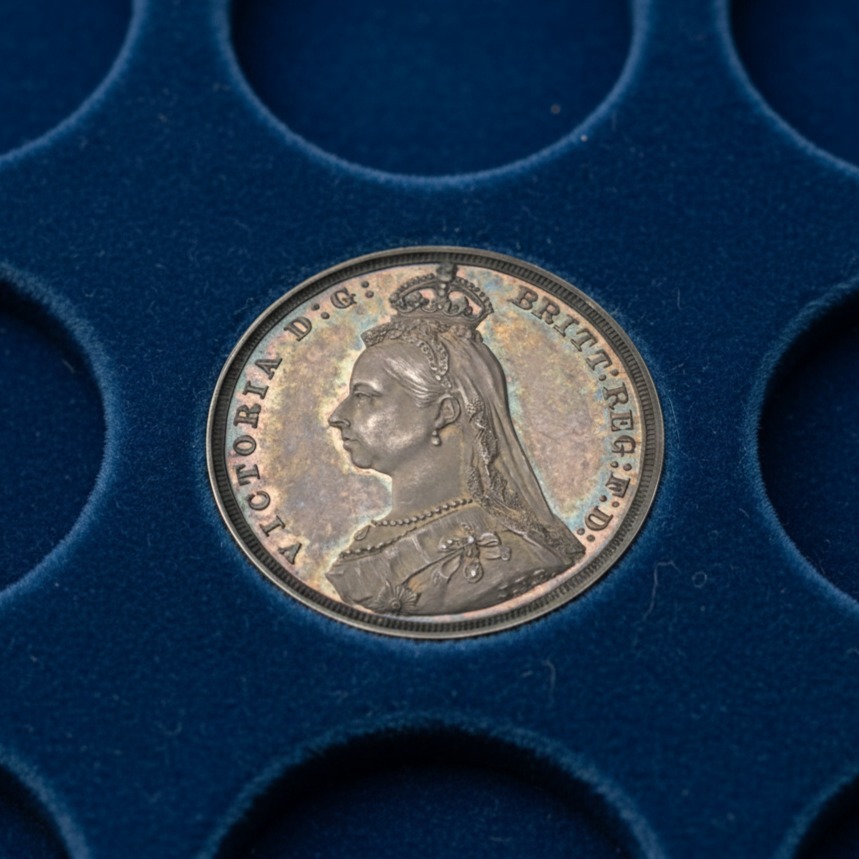
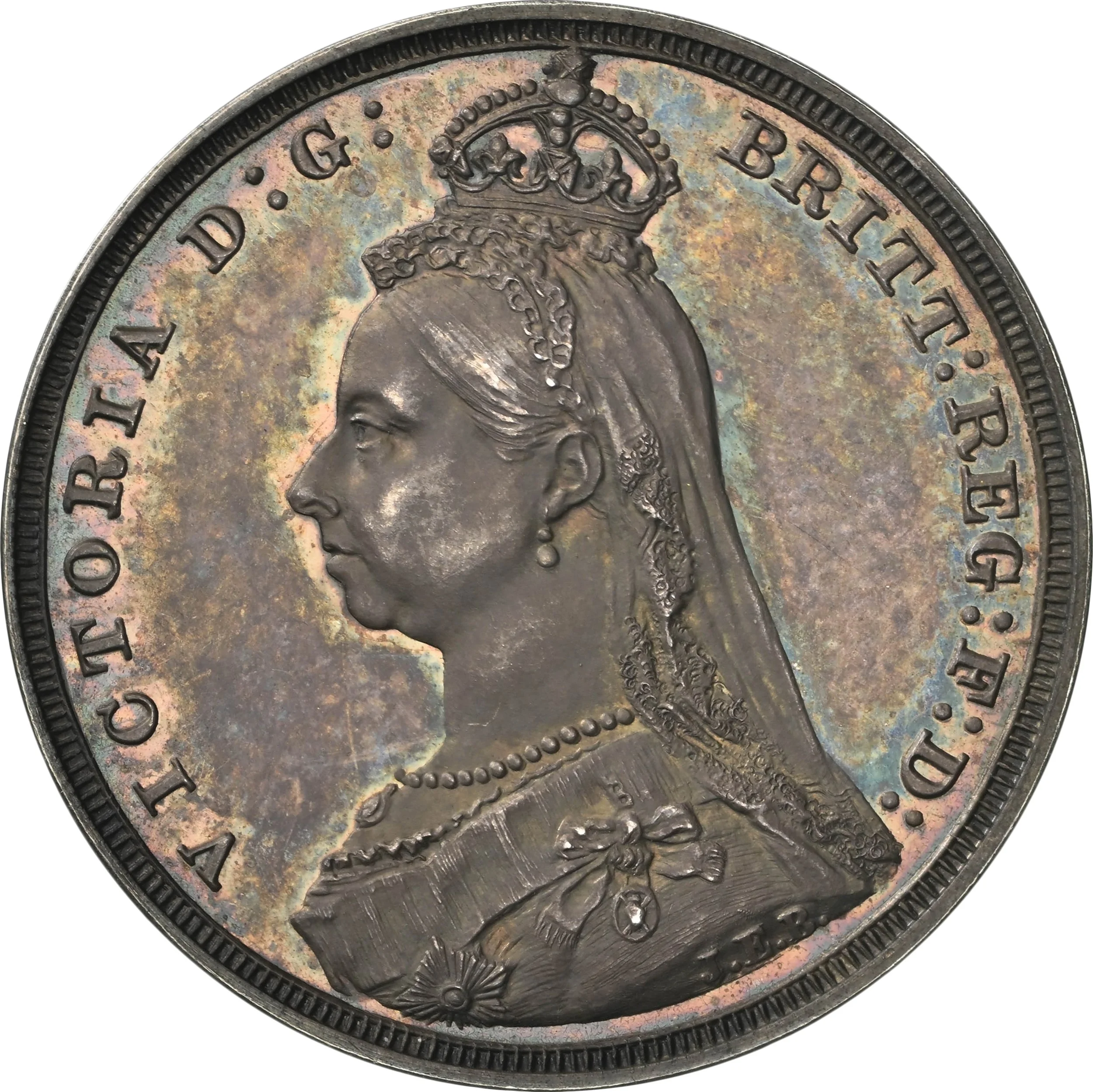
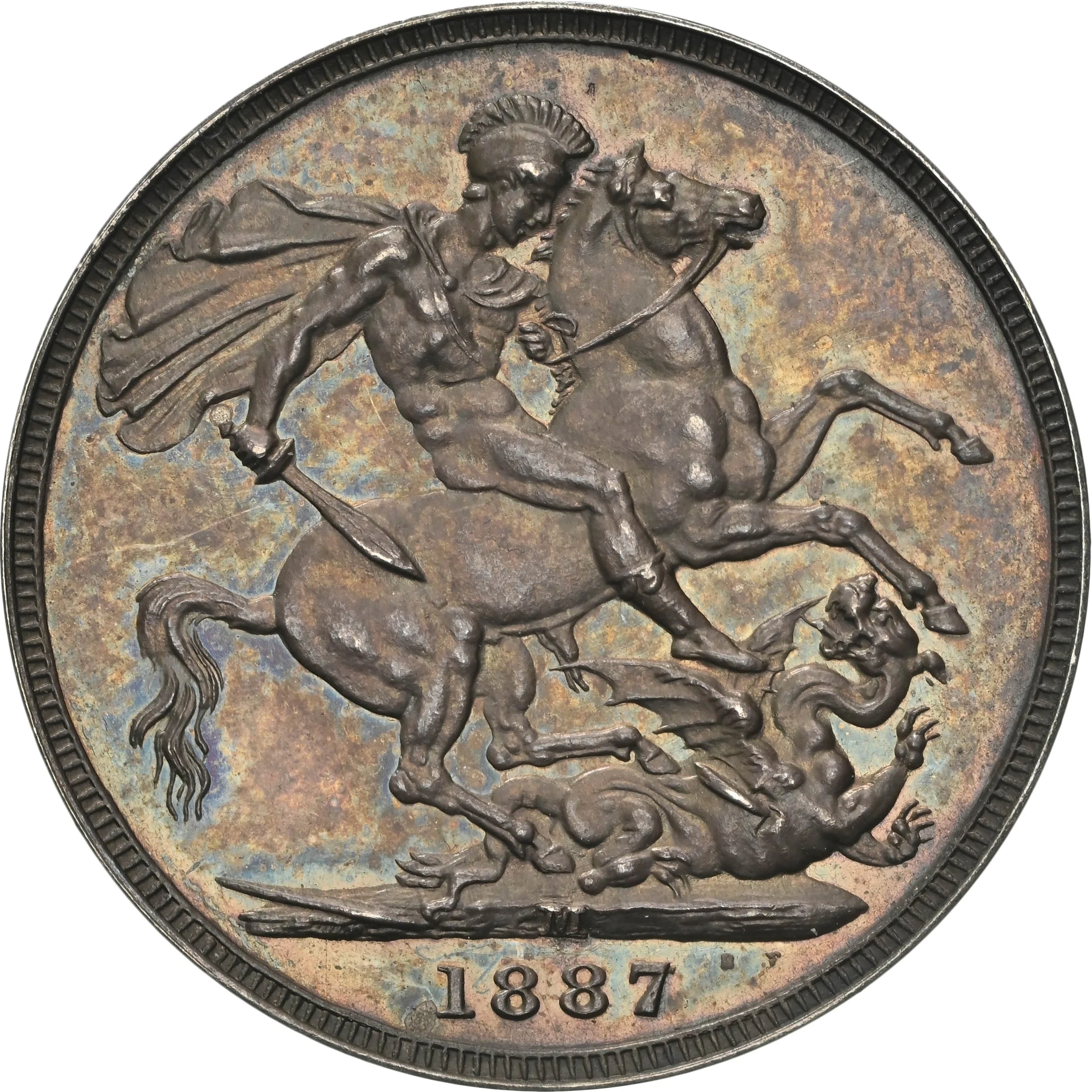
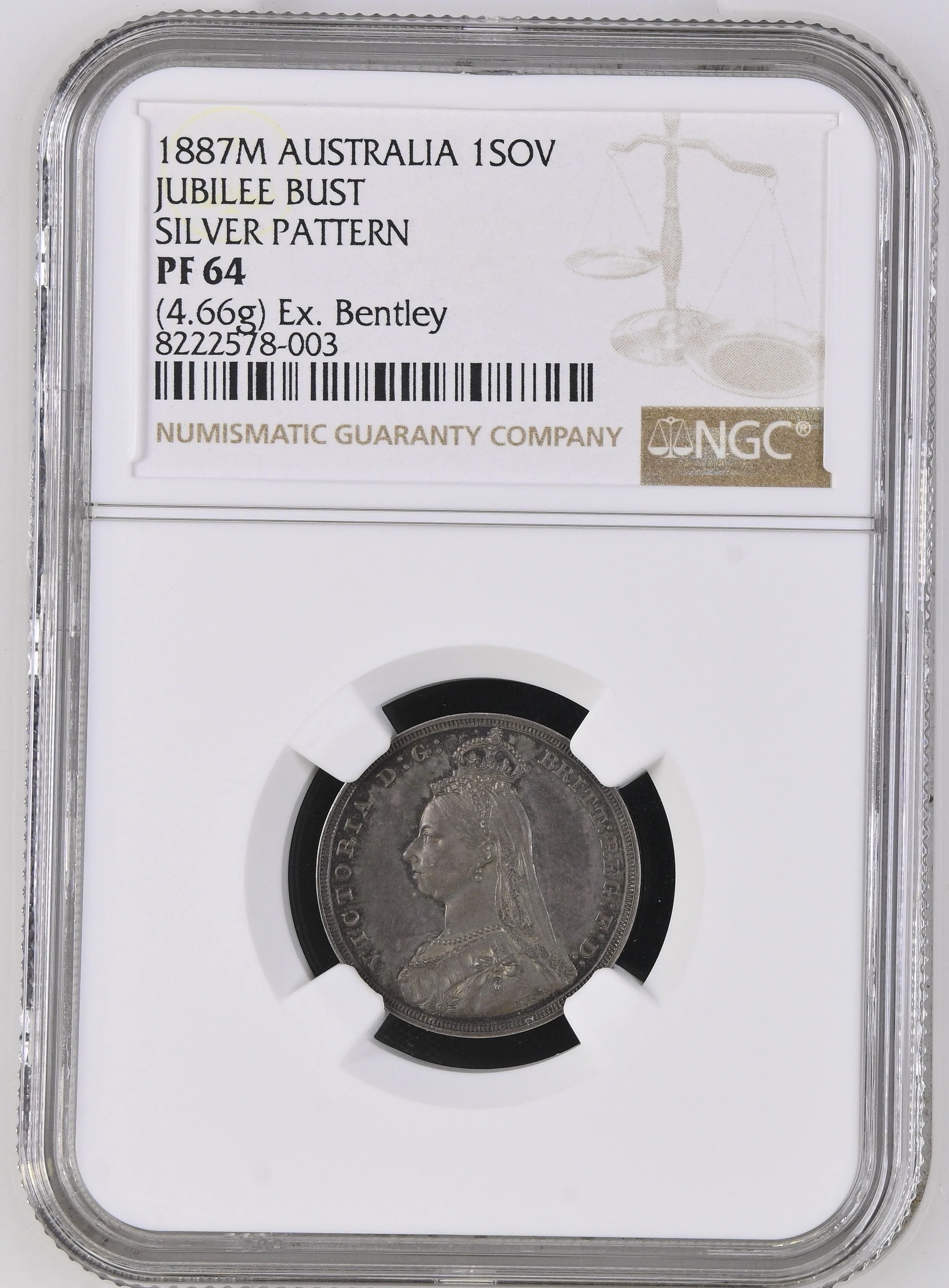
A unique coin of Australia with exceptional provenance
Why or how this coin exists is shrouded in mystery. Usually these types of ‘off metal’ sovereigns were produced to test the dies before production but it is typical for more than one example to be known if this is the case. As this coin is unique it is possible it was produced for someone of importance but there are no records to substantiate this.
From the famous Bentley collection - described at the time as the ‘ultimate British Sovereign Collection’. Provenance doesn’t get more important than this.
Australian Sovereigns were first minted in 1855 in Sydney. They were made to the same specification (weight etc) as the British Sovereign but their design differed. In 1871 the Royal Mint revoked this historic Australian design and replaced it with the same George and the Dragon design the British sovereign was adorned with (as seen here). This was done to reinforce the Empire and make the coins more ‘British’.
After World War I the requirement for gold coins almost disappeared, not helped by the fact that Sovereigns were withdrawn from circulation during and after the war as gold was required to fund firstly the war effort and then later to repay debts.
Because Sovereigns were only produced in Australia for 60 years it has made the collection of Sovereigns a more accessible venture for collectors, and therefore a popular one. There are many extremely rare year dates (largely due to the melting of Sovereigns) which command extremely high prices - in many instances more than their British counterparts.
ex A H F Baldwin collection
ex Spink Australia Sale 2, 2 November 1978, lot 613
ex Noble Numismatics Sale 70, 9-11 July 2002, lot 123,2 sold for $26,500
ex Bentley, Baldwin’s, Auction 76, Lot 787
About: James I
James I's reign (1603-1625) marked the union of the English and Scottish crowns, as he inherited the English throne upon his cousin Elizabeth I's death, having already reigned as James VI of Scotland since the age of one. This personal union was a significant event in British history, though the two kingdoms remained separate entities.
A key achievement of his reign was the relatively peaceful transition of power and the avoidance of major religious conflicts, despite the lingering tensions between Catholics and Protestants. He navigated these divisions with a policy of relative moderation, though events like the Gunpowder Plot tested this balance. The Gunpowder Plot of 1605, a failed attempt by Catholic conspirators to assassinate James and Parliament, was a significant event that shaped his reign and led to increased persecution of Catholics. This event solidified anti-Catholic sentiment and influenced subsequent policies.
Another significant achievement was the commissioning of the King James Bible, completed in 1611. This new translation of the Bible had a profound impact on the English language and culture, and it remains a significant literary work to this day. Unlike Elizabeth, James was married and had children, ensuring a clear line of succession. His son, Charles I, succeeded him to the throne, continuing the Stuart dynasty. However, James's reign was also marked by growing tensions with Parliament over issues of finance and royal prerogative, setting the stage for the conflicts that would erupt during his son's reign. Despite these challenges, James I's reign was a pivotal period that saw the union of the crowns and the creation of a lasting cultural legacy through the King James Bible.