
Why Rare Coins are Undervalued.
The Smart Money Alternative: Why Rare Coins Are Arguably the Most Undervalued Asset in the Luxury Collectibles Market
For the ultra-high-net-worth collector/investor, the portfolio often includes a "passion allocation"—assets that offer status, enjoyment, and historical capital appreciation. This allocation is dominated by two highly visible giants: Classic Cars and Blue-Chip Art.
These assets are often popular because they are showy wealth—trophies meant for public display, gallery walls, and auction headlines. Their valuation is often tied to this visibility and the ego-driven competition it inspires. The cost of visibility, however, is high risk and immense friction. This does of course ignore the fact that many are also connoisseurs and appreciate the engineering of a car or the skill of an artist - we do not wish to take away from this and are simply using broad strokes.
In contrast, Investment-Grade Rare Coins represent quiet wealth. They offer the same historical rarity and condition sensitivity as their showier counterparts, but in the most concentrated, portable, and logistically efficient format possible. This discretion, combined with proven resilience, is why numismatics is for us the most compelling undervalued sector in the luxury market today.
Here is why smart money is rotating from high-friction public trophies into frictionless private assets.
1. The Valuation Gap: The Cost of "Owning the Best"
The core opportunity in numismatics is the chance to dominate a collection tier for a fraction of the price of other assets. While a rare coin may never hit the dizzying heights of a $450 million painting, the key is the cost to acquire the undisputed finest known example.

Leonardo da Vinci’s Salvator Mundi
$450 Million
Pricing driven by museum-level competition and global status seeking.

Mercedes-Benz 300 SLR Uhlenhaut Coupé (1955)
$142 Million
Ultimate trophy asset; high logistical friction and maintenance overhead.
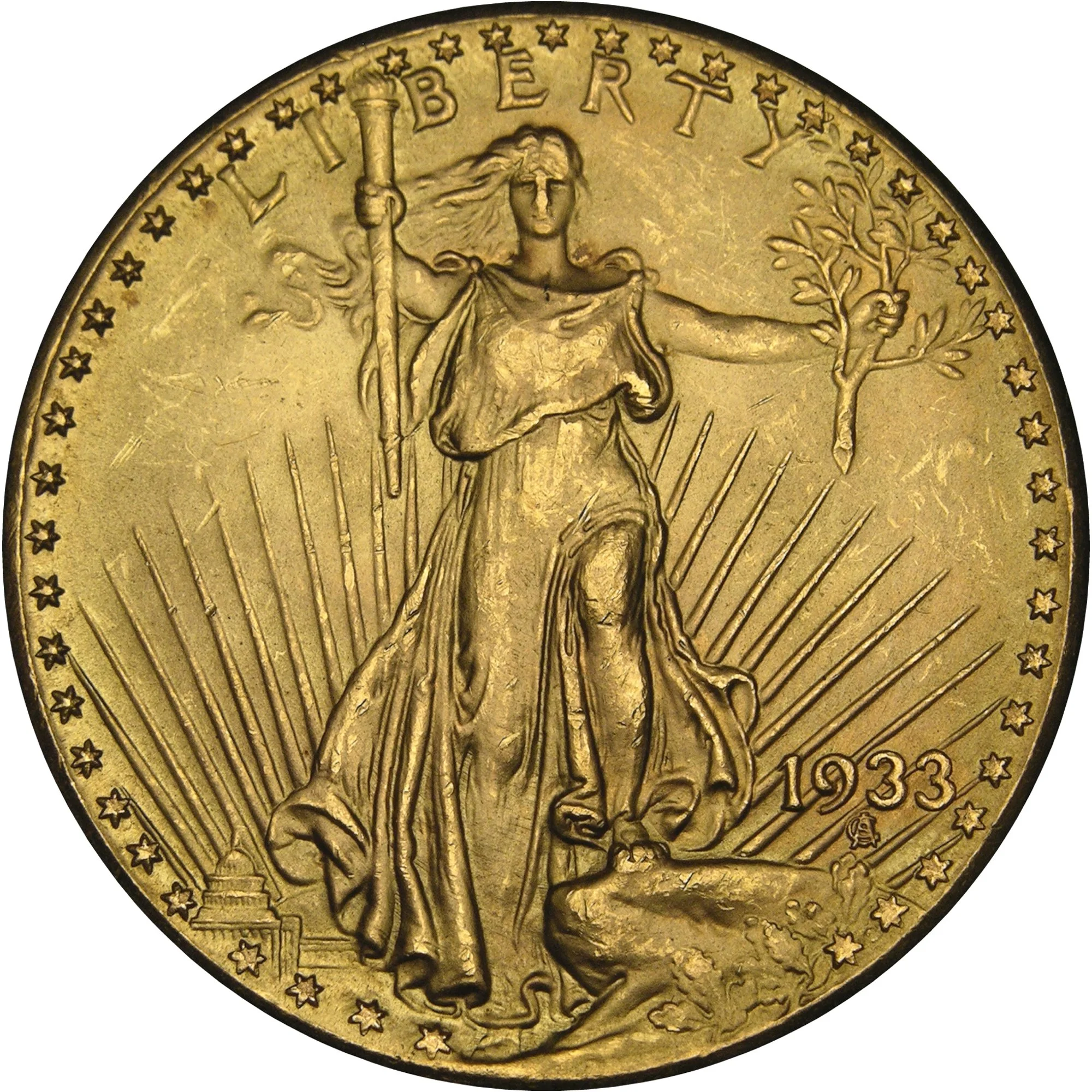
1933 Double Eagle
$18.9 Million
The most famous, unique American coin; its value ceiling is 8-25x lower than art/cars.
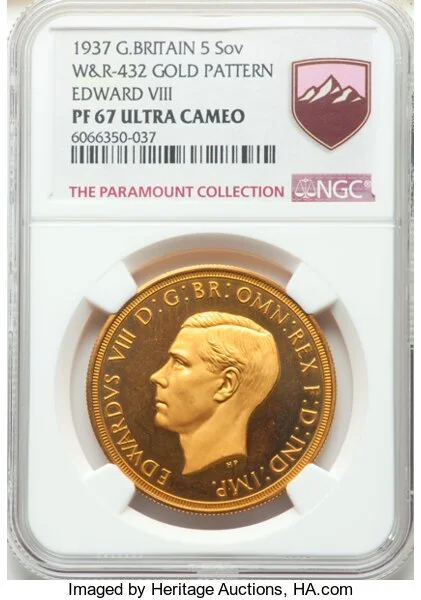
Edward VIII Proof 5 Pounds
$2.28 Million
One of only 2 known in private hands (the remaining four sit in institutional collections); profound royal history and Britains most expensive coins
The Opportunity: The Barrier to Quality Entry
A £100,000 budget for classic cars buys a complex restoration project or a highly common model.
A £100,000 budget for art buys a tertiary piece, often with questionable and risky long-term appreciation prospects.
A £100,000 budget for rare coins buys an unquestionably superb, census-quality example of a historically important coin or a small selection of exceptional coins with proven track records. The entry point for true investment-grade quality is fundamentally lower, offering superior value density at the middle and upper tiers.
2. Performance, Resilience, and Lower Volatility
The high visibility of art and car auctions often masks significant market volatility. While prices spike during periods of high liquidity, they are often subjected to brutal corrections, as seen during the 2008 financial crisis in certain car and contemporary art sectors.
Rare coins, linked intrinsically to precious metals and historical significance, demonstrate a superior resilience during downturns:
Recession Resistance: As tangible assets with inherent metal value, high-grade coins often serve as a flight-to-quality asset during economic uncertainty, performing better than other luxury goods.
Lower Correlation: The numismatic market is less correlated with equity markets than the fashion and trend-driven contemporary art or vintage car markets, making it an excellent diversification tool.
3. The Logistical Advantage: Portable, Quiet Wealth
Classic cars and art are "heavy" assets, demanding massive capital expenditure beyond the purchase price for storage, transport, and servicing.
The Burden of Cars & Art: These assets are expensive to insure and fragile to move. They require continuous capital input (maintenance, climate control, security) while you own them.
The Coin Advantage (Value Density): Rare coins are the ultimate portable wealth. A collection worth £10 million fits in a standard safe deposit box. This unparalleled value density is the definition of quiet wealth—private, secure, transportable and entirely shielded from public view.
Minimal Holding Cost: A certified coin does not rot, fade, or require servicing. It has virtually zero holding cost beyond basic vaulting, maximizing long-term net returns.
4. The Certainty of Condition (The Third Part Grading Factor)
The numismatic market is the only major collectible market (along with say Comicbooks) with a universally accepted, third-party guarantee of condition: PCGS and NGC Certification.
Standardisation: A coin’s grade (e.g., MS-65) is locked in a secure, sonically sealed holder. The market trades on this grade with absolute confidence globally.
Risk Elimination: This eliminates the subjective, costly, and contentious debates over "restoration," "originality," and "provenance" that plague the art and classic car markets, giving numismatic investors a certainty of asset quality that is unmatched.
5. Market Transparency and Accessibility.
The art market and classic car markets are opaque by nature (though the latter is arguably less so). There is also a less demonstrable ‘funnel’ where a future buyer of the most sought after rare items can start accessing more ‘reasonably priced’ items - with their collection growing as their purchasing power increases (which is also a symptom of a high barrier to entry and makes it harder for those to enter the market in any meaningful way).
In contrast the rare coin market is becoming increasingly transparent. Most auction houses publish the prices of their sales which means it is easier for buyers to establish ‘fair value’ and reduces the risk of unscrupulous dealers over charging. This transparency also means education is improving - it was only in the recent past where dealers acted as ‘gate keepers’ to much of the knowledge out there.
Conclusion: The Rational Choice for Passion Capital
While art and classic cars are fantastic for public visibility, they are currently priced at the top of their hype cycles and carry high friction, high holding costs, and subjective condition risks.
Rare coins offer a cleaner, more rational alternative. They provide the same thrill of "The Hunt," the same historical prestige, and the same verified scarcity—but they do so quietly, securely, and with the added benefits of lower volatility, minimal holding costs, and an astonishingly low barrier to owning the absolute best quality. For the investor seeking to maximise the efficiency and discretion of their passion capital, numismatics is the clear, undervalued winner.
Why does this make them undervalued?
In a world that is arguably more volatile (both economically and geopolitically) at any time since the Cold War it is natural that safe haven assets will be sought after. This has been demonstrated in the last few years with the ferocious buying of gold by world banks (which has recently translated into exceptional price rises).
It cannot be stressed enough that currently rare coins are viewed by a very small portion of the population as a legitimate investment. This is not a symptom of any form of poor performance but rather a lack of knowledge and education on their virtues. It would only take a small percentage of the global retail gold market to transition to the rare coin market for the price pressure to be exponential.
Important Information & Risk Disclosure
The content provided by Heritatum is for informational and educational purposes only and does not constitute financial, investment, or tax advice. Rare coins are tangible assets and should be viewed as a long-term diversification strategy rather than a traditional liquid investment. Tax treatment depends on individual circumstances and may be subject to change. We recommend consulting with a qualified tax professional