
The Three Pillars of Numismatic Value: What Makes a Coin Sought After
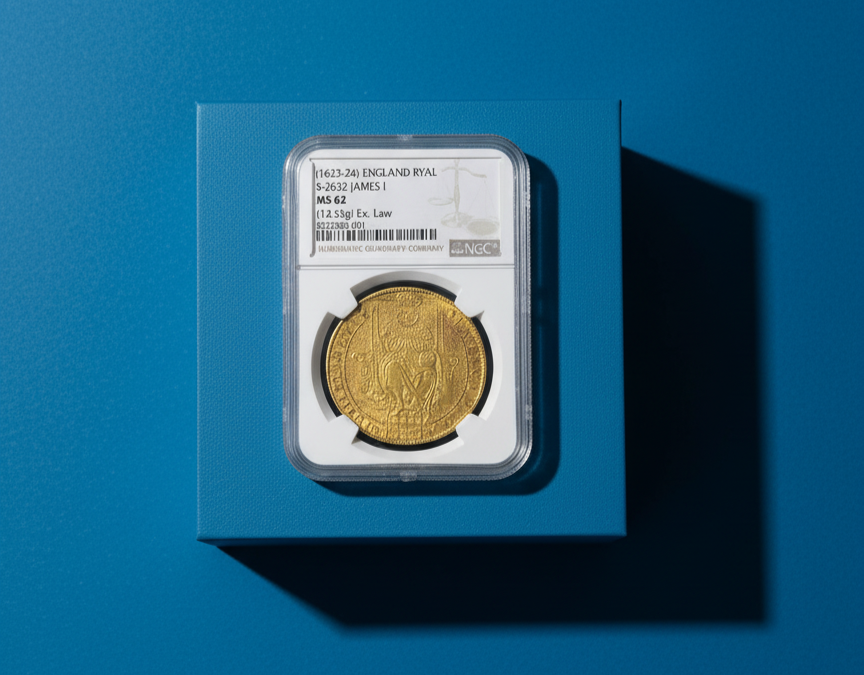
In numismatics, value is determined by the interplay of objective data and historical narrative. For the strategic investor, three distinct pillars must align for an asset to be considered for purchase. These are:
Rarity
Condition
Desirability
These pillars are neither stand-alone nor mutually exclusive. There are significant overlaps between the three—for example, a coin may not be rare in an absolute sense, but becomes rare (and therefore desirable) because of its condition (the ‘single finest’ for example), creating what we term ‘conditional rarity’.
Pillar 1: The Rarity Factor
Rarity is the most fundamental driver of value, but it is often misunderstood. We categorise rarity into two distinct forms:
Outright Rarity: A coin produced in low numbers as a ‘pattern’ (a prototype) or one produced in higher numbers but with high attrition rates (by design or otherwise), resulting in a low survival rate.
Conditional Rarity: Where there is a high population count but a low number of highly rated coins (at the extreme, a "single finest" as outlined above).
A. Original Mintage vs. Survival Rate
Occasionally a coin may be produced in very low numbers (usually a pattern a trial coin). Equally a coin might have started with a mintage of 1 Million+ but if 99.9% were melted down, lost to wars, or simply worn out in circulation, the surviving population becomes the true rarity figure. For the ultra-high-end market, this number is often less than a dozen, sometimes only one. Below we have examples of the 2 extremes of this.
Original Mintage. Edward VIII: His story is well known for the scandal it caused and the constitutional crisis it threw the British Monarchy into. In 1936 Edward was King for just under a year before abdicating in order to marry the divorced American socialite Wallis Simpson. His coinage is of interest for more than one reason: tradition dictated that each new Monarch face the opposite way to their predecessor, but Edward wished for his hair parting to be on display, so he insisted his portrait face the same way (left) as his father, George V. No gold coinage was issued in Great Britain before Edward abdicated, so only a small number of test pieces (or patterns) were produced. There are only two sets of coins in private hands (of the believed six in existence)—one set has been broken up and the other is intact. While no price for the set has ever been published, the largest coin (a £5 or quintuple Sovereign) holds the record for the most expensive British coin at circa $2.3 Million.
Survival Rate. Australian Sovereigns of the 1920s: While many associate the ‘Sovereign’ as a distinctly British coin, it was produced in several parts of the Commonwealth—Canada, India, and Australia. The Sovereigns produced in Australia in the 1920s (at various mints) are an interesting case, as many were melted down in order to pay war debts. This means that whilst the original population was high, the survival rate is incredibly low. These coins carry a significant premium compared to other Sovereigns produced at the same time in different geographies, with certain years and mints being rarer than others. So whilst mintages look high (from historical records) the survival rate is relatively small.
B. The Definitive Metric: The Population Report
With only a few exceptions for the rarest coins (where there are fewer than roughly 50 known), the only reliable, non-negotiable measure of scarcity is the Population Report provided by the major grading services (PCGS/NGC).
Top Pop: The most desired coins are those that are the finest known examples. When a coin is "Top Pop" (top of population), it means it cannot be functionally duplicated, instantly creating a scarcity monopoly that drives value. Of course, this approach does come with risks, as not all coins have been graded and there is a risk that another example will turn up that is equal or better.
The Population Drop: The price of a coin often drops precipitously even if only one higher-graded example exists. The market pays the highest premium for the absolute best, as those with the deepest pockets battle it out to own the exclusive "best" coin.
Pillar 2: Condition
While rarity defines the potential supply, condition defines the available quality. Modern Numismatics uses a 70-point grading scale called the Sheldon Scale, and small moves at the top of this scale result in massive, non-linear value increases.
A. The Exponential Value Curve
The difference between a coin graded MS-66 and one graded MS-67 is a small difference in strike, luster, or surface preservation—usually undetectable to the naked eye. However, the price difference can easily be over 10x . This is the essence of ‘conditional rarity.’ We explore this further in the blog ‘
Example (The Gillick Portrait): In the case of the Elizabeth II Sovereigns, the Mary Gillick portrait was struck in low relief and typically treated badly. Finding an example that has maintained its full detail and luster, and therefore is awarded a high grade, is a prime example of Conditional Rarity.
B. The Imperative of Certification
The integrity of the grade is crucial and removes a huge amount of subjectivity. A coin must be certified by a reputable third-party grading service (PCGS or NGC). Certification ensures:
Impartiality: The grade is assigned by a panel of experts, removing dealer bias.
Permanence: The coin is sonically sealed in a tamper-evident holder, locking in the grade and protecting its surface.
Liquidity: The certified grade is an international data point, guaranteeing quick transaction ability internationally.
Whilst coins without certification can still have massive appeal, the market is increasingly requiring that a coin is certified.
Pillar 3: Desirability (The Narrative)
Rarity and condition are objective data points. The third pillar is the subjective, yet powerful, factor of Market Demand, driven by a coin's story. While rarity and condition contribute to desirability, it is often driven by aesthetic and historical factors.
A. Provenance: The Ownership History
A coin with a verifiable, famous ownership history (provenance) commands a significant premium. For example, a coin once owned by a known historical figure, or part of a landmark collection (like the Eliasberg or Law collections), carries a premium due to the added prestige and history. Provenance links the asset directly to numismatic legend.
B. Design
The market always chases coins featuring iconic, highly artistic designs. British examples include:
The beautiful 1847 silver ‘Gothic Crown’ by Wyon.
The impressive ‘Una and the Lion’ £5 gold coin of 1839.
The significant 1831 ‘Merlen’ Crown.
These may not be produced in very small numbers, but there is a deep pool of competitive buyers—collectors, institutions, and investors alike—who are emotionally, historically, and financially motivated to acquire the most impressive assets, which drives prices.
C. Historical Significance
This can come in several forms. There are coins from famous hoards or shipwrecks with a direct connection to an event. There are also coins such as the Guineas produced with gold seized from the Spanish, which the British then signified by adding the wording ‘VIGO’ or ‘LIMA’ (depending on where and from whom the gold was taken). Other Guineas feature the ‘Elephant and Castle’ or ‘EIC’ (East India Company who provided the gold)—these all tie the coins to an identifiable event, further increasing market desire.
Conclusion: The Strategic Weighting of Value
Understanding these pillars is not about finding a perfect "triple threat" every time; it is about recognising which pillar is doing the heavy lifting for a specific asset. In many cases, one pillar alone can carry the entire value of an acquisition. An Edward VIII pattern remains a million-dollar coin regardless of its condition, just as a common 1950’s Sovereign becomes a trophy asset purely through its "Top Pop" status.
Ultimately, predicting the future of the market requires foresight into how these pillars might shift, particularly as desirability is the most fluid of the three. While rarity and condition are relatively fixed, the market's "appetite" shifts with trends, geopolitical sentiment, and even the gold price, which often acts as a rising tide for the entire sector. Identifying where a coin’s current standing is undervalued—perhaps a niche historical narrative poised to become tomorrow’s sought-after provenance—is the art of numismatic investment. This is in part what Heritatum is here to help with: by looking at both data and market trends, we aim to help our clients position themselves to be "rediscovered" by the next generation of investors.
Important Information & Risk Disclosure
The content provided by Heritatum is for informational and educational purposes only and does not constitute financial, investment, or tax advice. Rare coins are tangible assets and should be viewed as a long-term diversification strategy rather than a traditional liquid investment. Tax treatment depends on individual circumstances and may be subject to change. We recommend consulting with a qualified tax professional