
The Two-Pot Strategy: Balancing Rarity, Alpha, and Tax-Efficiency
In the world of high-value tangible assets, gold remains the ultimate anchor, the traditional safe haven. However, for the sophisticated buyer, the strategy is rarely as simple as "buying gold." To truly optimize a portfolio, one must distinguish between Defensive Bullion and Numismatic Masterpieces.
At Heritatum, we help our clients navigate these two distinct "pots" of capital, ensuring that while one protects your wealth, the other actively builds your legacy.
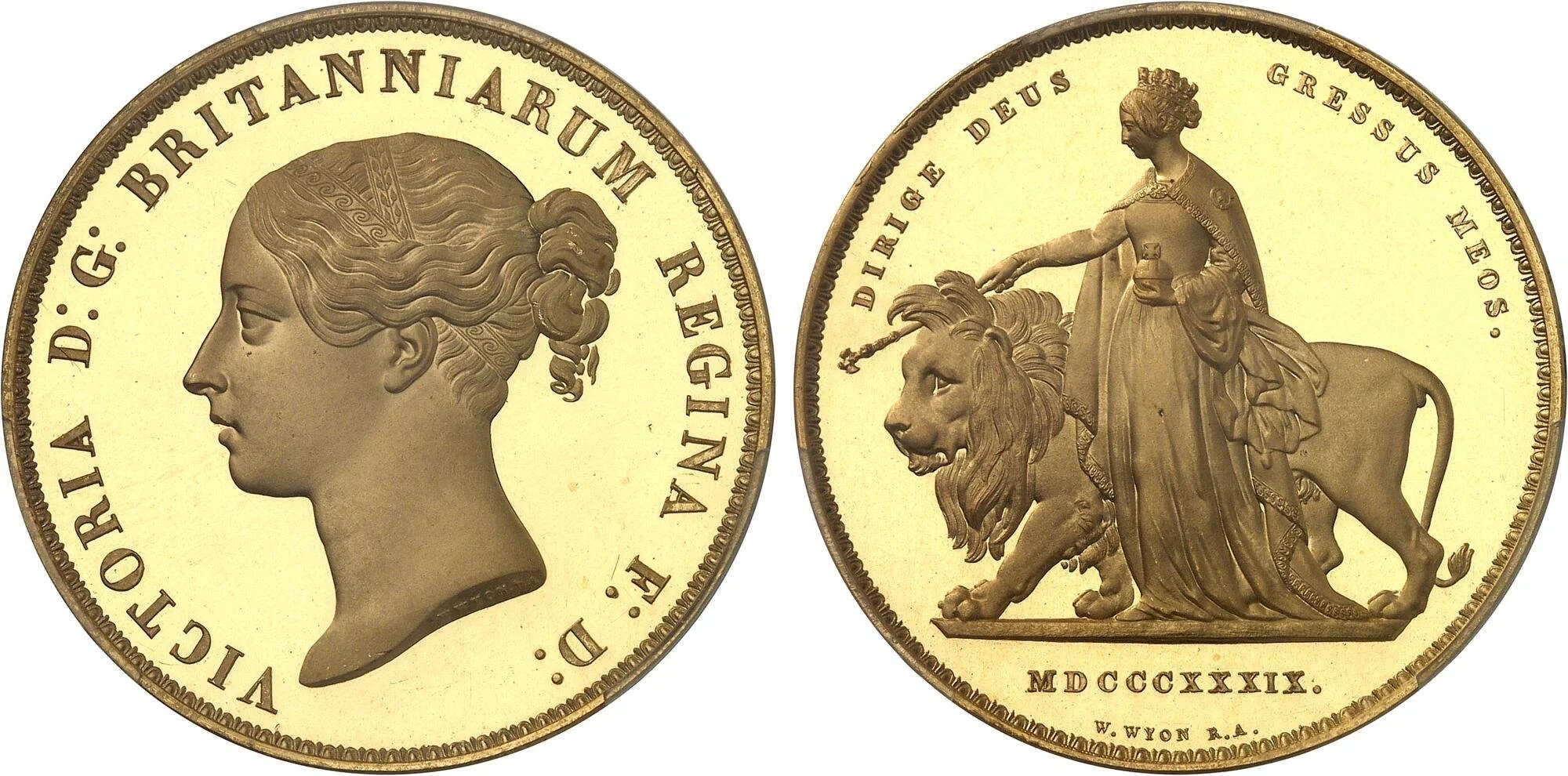
1839 £5 ‘Una and the Lion’
Arguably the most iconic British coin ever created. Price for these regularly exceed $250,000 with the finest examples achieving in excess of $1 Million.
The "Two-Pot" Framework
Many investors already have a Defensive Pot—standard bullion bars or modern coins kept as a hedge against currency debasement. But the true growth potential lies in the "Alpha Pot": A selection of investment-grade rarities where value is driven by history and scarcity, not just the metal's weight.
Pot 1: The Defensive Hedge (Bullion)
Purpose: "Wealth Insurance" against systemic volatility.
Performance: Strictly tracks the "spot price" of gold (XAU). This is the market "Beta"—moving with the general tide.
Supply: Theoretically infinite; the Mint strikes millions of new bullion units annually.
Pot 2: The Alpha & Legacy Portfolio (Numismatics)
Purpose: "Wealth Creation." Active outperformance of the commodity market.
Performance: Driven by a rarity premium. This is Alpha—the extra return generated by absolute scarcity and condition.
Supply: Fixed and often dwindling. Whether it is a hammered 1645 Oxford Unite or a milled Five-Guinea piece, the supply is capped by history.
The Strategic Bonus: The "Post-1837" Advantage
While the primary driver for any numismatic acquisition should be rarity and historical significance, the British market offers a unique structural benefit for a specific subset of coins.
Under current HMRC rules, British legal tender gold coins struck after 1837 are exempt from Capital Gains Tax (CGT). This includes iconic issues like the "Una and the Lion," Victorian Five-Pound pieces, and rare-date Sovereigns.
The Hybrid Benefit: For the investor who values tax-efficiency, these post-1837 "Blue Chips" allow for a dual-strategy: the high-alpha growth of a rare coin with the 0% CGT status of a more modern coin. It is a tax approach that few other asset classes can match.
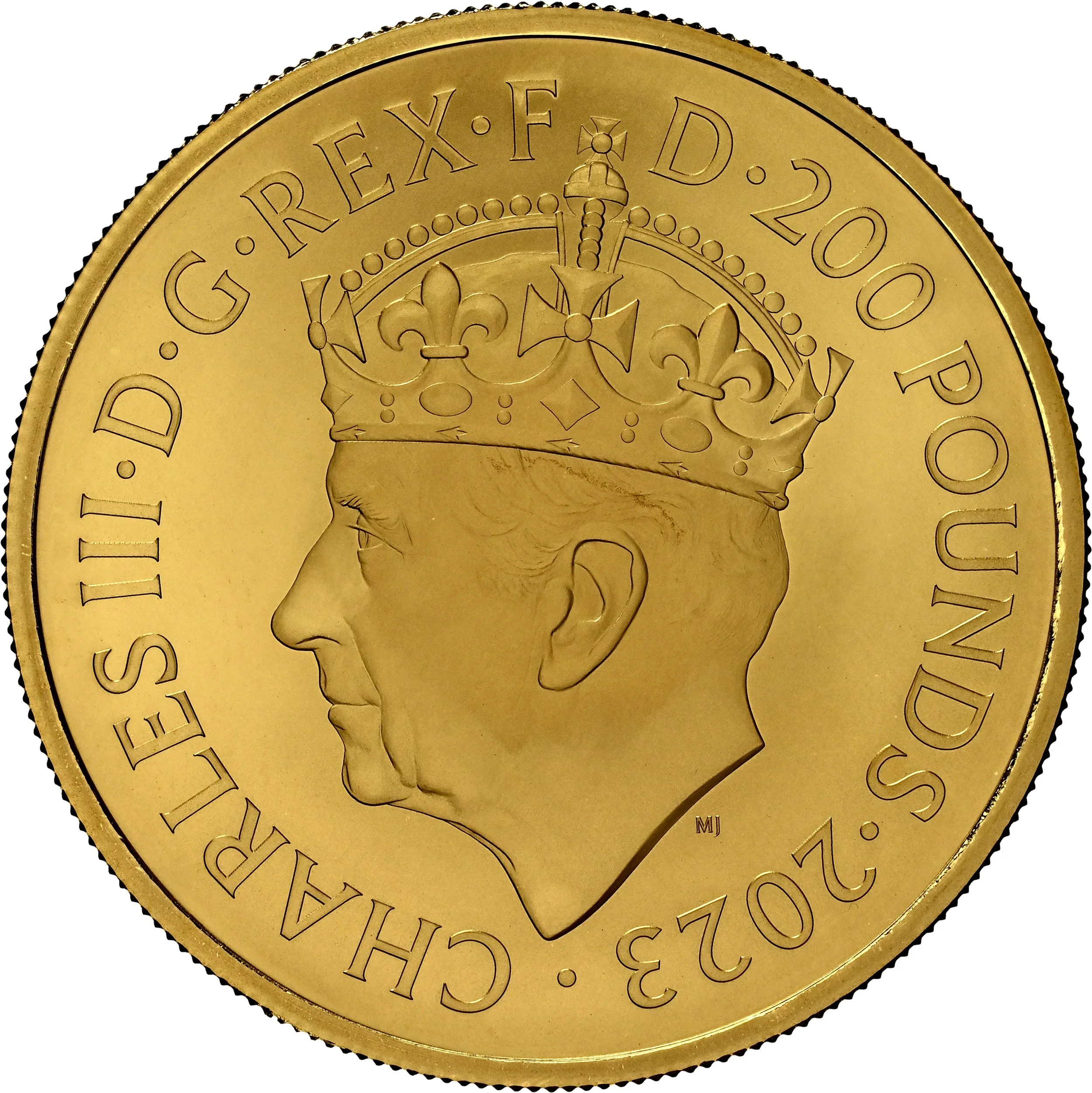
A true modern rarity
This 2oz Gold coin was issued in 2023 to celebrate the Coronation of Charles III. It features a special ‘matte’ finish and was issued at a strict limit of 106 pieces.
Beyond 1837: Where True Rarity Lives
While the tax benefits of Victorian and 20th-century gold are compelling, the heart of the Heritatum philosophy often lies in the Pre-1837 and Hammered eras.
Coins like the Charles I Triple Unites or William & Mary Five-Guineas do not rely on tax exemptions to justify their place in a portfolio. Their value is derived from their status as "Trophy Assets"—pieces of history so rare that they create their own market dynamics.
Historical Alpha: Their scarcity is so absolute that their price action can completely decouple from the price of gold.
A Separate Asset Class: We view these earlier pieces not as "gold coins," but as alternative investments backed up by hundreds of years of performance..
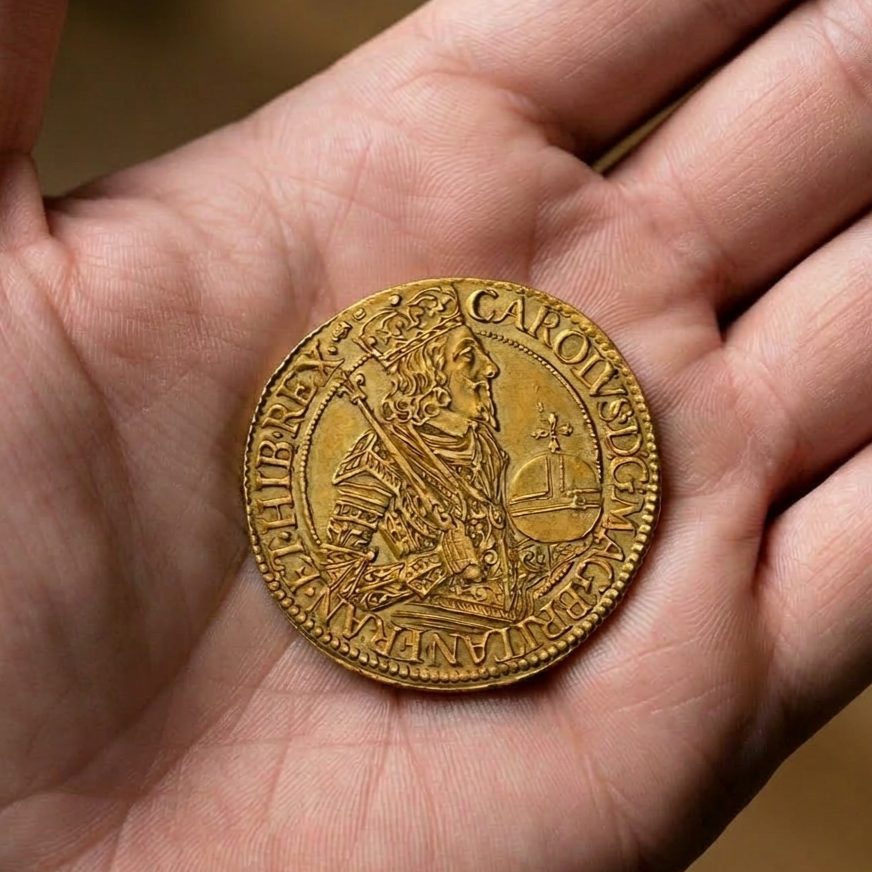
Building a Balanced Portfolio
A robust Heritatum-guided portfolio often utilises a blend of both worlds depending on the clients aims:
The Growth Core (Pre-1837): Anchored by rare hammered and early milled gold. These provide the highest historical "Alpha" and prestige.
The Tax-Efficient Sleeve (Post-1837): Targeted acquisitions of "Top Pop" Victorian and Edwardian gold to capture significant capital gains without the friction of taxation.
Summary: Professional Navigation
At Heritatum, we don't discourage bullion; we simply believe it is only half the story. Whether we are securing a CGT-free Victorian Proof set or a unique English Civil War rarity, our mission is the same: to ensure your capital is positioned in the most desirable, verified, and historically significant assets in the global market.
Frequently Asked Questions: Gold & UK Taxation
Are British gold coins CGT free?
Only British legal tender coins struck by the Royal Mint are exempt from Capital Gains Tax. This includes all Sovereigns struck from 1837 onwards and all Britannia gold coins.
Do I pay tax on rare hammered coins?
Yes. Coins struck before 1837 (including medieval hammered gold) are generally subject to Capital Gains Tax upon disposal if the gain exceeds your annual allowance. However, their historical rarity often leads to capital appreciation that significantly outpaces the tax liability. You should always consult with an adviser on these matters.
Why is 1837 the cutoff for tax-free gold?
The 1837 date marks the beginning of the reign of Queen Victoria. HMRC generally considers legal tender coins from this era onwards as "currency" for the purposes of CGT exemption, whereas earlier pieces are treated as "chattels" or historical artifacts.
Can I offset losses on pre-1837 coins?
Because pre-1837 coins are subject to CGT, any capital losses incurred on their sale can typically be used to offset gains made on other taxable assets, such as stocks or second homes. Again you should always consult a tax expert on these matters.
Important Information & Risk Disclosure
The content provided by Heritatum is for informational and educational purposes only and does not constitute financial, investment, or tax advice. Rare coins are tangible assets and should be viewed as a long-term diversification strategy rather than a traditional liquid investment. Tax treatment depends on individual circumstances and may be subject to change. We recommend consulting with a qualified tax professional.
Heritatum specialises in helping our clients not only purchase items that fit with their own financial goals but ones that also resonates with them. We work with our clients to build a personal narrative so they find the emotional rewards associated with numismatics.